 AtticShield


The Importance of Insulation Climate Zones in California
When it comes to energy efficiency in California homes, no detail is more overlooked — or more critical — than your climate zone. From the cool breezes of San Diego to the snowy peaks of Mammoth Lakes, insulation requirements vary dramatically depending on your exact location.
That’s why the California Energy Commission (CEC) and the International Energy Conservation Code (IECC) use climate zone maps to set insulation standards. These zones dictate the minimum R-values for attics, walls, crawl spaces, and ducts.
If you live in California and are replacing insulation, upgrading your HVAC, or pulling permits for any remodel — understanding your zone is mandatory. At AtticShield, we make sure our work not only meets but exceeds California’s zone-specific insulation requirements.
In this guide, we’ll walk you through the map, break down the zones, and explain the exact insulation R-values required in your area. You’ll also see how AtticShield’s installations are engineered to comply with Title 24, California’s official energy code.
What Is an Insulation Climate Zone?
An insulation climate zone is a region defined by:
- Temperature patterns (hot summers vs cold winters)
- Humidity levels
- Solar exposure
- Altitude and weather extremes
- Heating and cooling demand
Each zone has different energy needs, and therefore, different insulation requirements.
The higher your zone number, the colder your region — and the more insulation you’ll need.
In the U.S., these zones are set by the IECC. In California, however, the CEC assigns its own zone numbers (16 total), with zones 3–6 being the most common for residential homes.
Recommended Home Insulation R–Values
Insulation levels are specified by R-Value. R-Value is a measure of insulation’s ability to resist heat traveling through it. The higher the R-Value the better the thermal performance of the insulation. The table below shows what levels of insulation are cost-effective for different climates and locations in the home.

Learn how to take action today and Rule Your Attic! with ENERGY STAR.
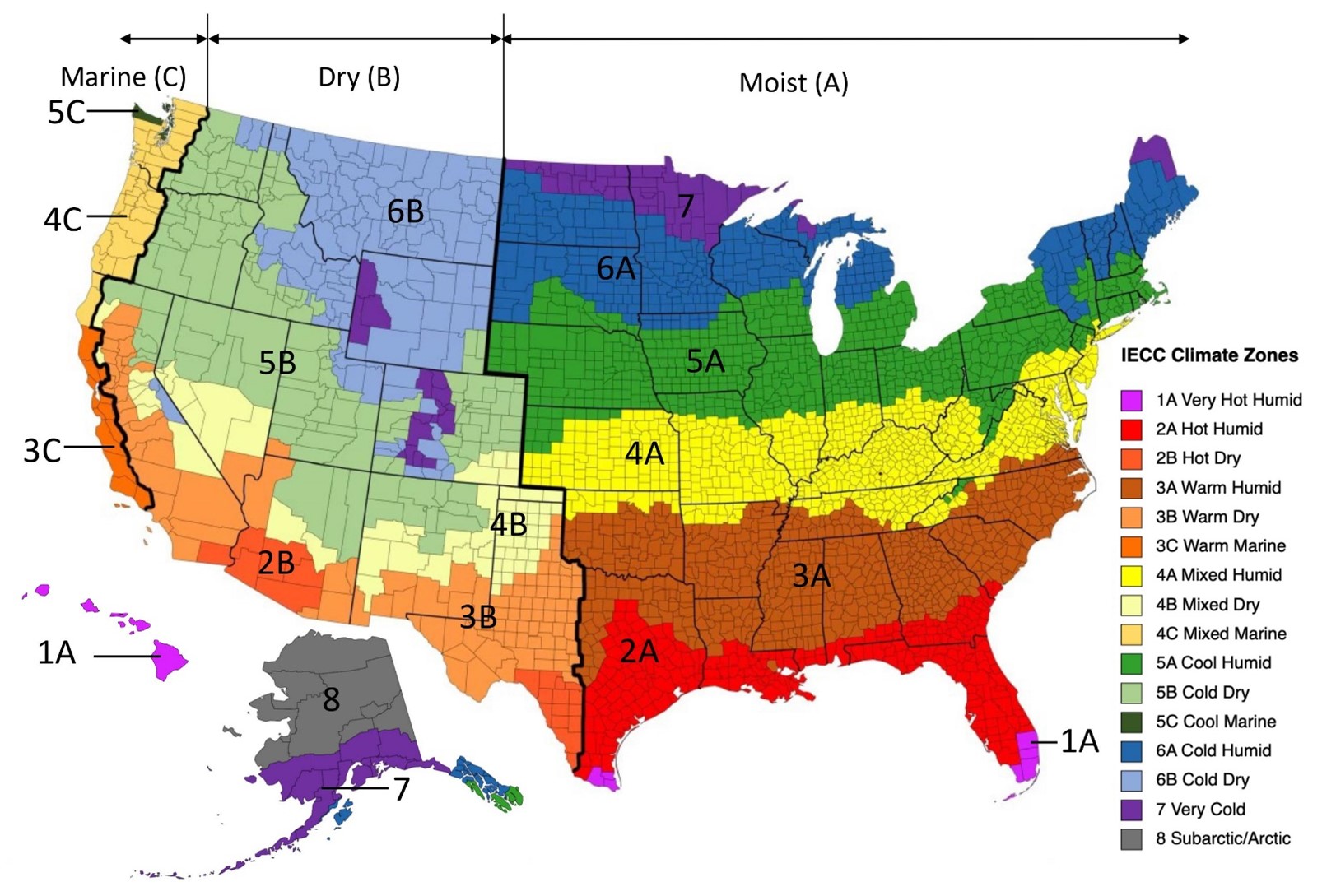
| Zone | Add Insulation to Attic | Floor | |
|---|---|---|---|
| If your attic is uninsulated | If you already have 3–4 inches of insulation | ||
| 1 | R30 | R25 | R13 |
| 2 | R49 | R38 | R13 |
| 3 | R49 | R38 | R19 |
| 4A and 4B | R60 | R49 | R19 |
| 6, 5, and 4C | R60 | R49 | R30 |
| 7 and 8 | R60 | R49 | R38 |
| Wall Insulation (above the ground) – Whenever exterior siding is removed on an: Uninsulated wood-frame wall:Drill holes in the sheathing and blow insulation into the empty wall cavity before installing the new siding, andZones 3: Add R5 insulative wall sheathing beneath the new sidingZones 4–8: Add R5 to R10 insulative wall sheathing beneath the new siding.ORInsulated 2×4 wood-frame wall:For Zones 4–8: Add R10 insulative wall sheathing beneath the new siding.Basement or Crawlspace Wall Insulation:Zone 3: Add R5 insulative wall sheathing or R13 batt.Zones 4A and 4B: Add R10 insulative wall sheathing or R13 batt.Zones 4C and 5–8: Add R15 insulative wall sheathing or R19 batt.Note: This guidance is based on the 2021 International Energy Conservation Code (IECC) Residential Provisions Chapter 4 Table R402.1.3. See Code for more detailed guidance. | |||
Why California Has Its Own Code (Title 24)
California leads the nation in building energy efficiency. Instead of adopting the IECC word-for-word, the state created its own customized code: Title 24, Part 6.
Title 24 is more stringent than the IECC and includes:
- Climate-specific R-value mandates
- Solar energy integration
- High-performance attic construction
- Air sealing and duct insulation standards
The result? California homes consume less energy per square foot than any other state. But homeowners must stay compliant.
That means you need to know your zone number and your R-value targets — before you insulate.
California Climate Zone Map (Residential Focus)
Below is a simplified representation of how California’s climate zones are distributed:
- Zone 3 (Coastal): San Diego, LA, Santa Barbara
- Zone 4 (Inland/Valley): Temecula, Lake Elsinore, Riverside
- Zone 5 (Interior North): Sacramento, Redding, Modesto
- Zone 6 and above: Lake Tahoe, Truckee, Big Bear, Mammoth Lakes
These zones are used by building departments, energy modelers, contractors, and HERS raters to determine code compliance.
Each zone affects:
- The required R-value for attic insulation
- Whether cool roof materials are required
- How much duct insulation is needed
- Whether high-performance attic construction (HPAC) is mandatory
Zone 3: Southern Coastal Regions (San Diego, Los Angeles)
Zone 3 is defined by mild winters and hot, dry summers, with moderate year-round temperatures and strong coastal breezes.
Key Cities:
- San Diego
- Los Angeles
- Santa Barbara
- Ventura
- Long Beach
Title 24 Insulation Requirements (Zone 3):
| Area | Required R-Value |
|---|---|
| Attic (vented) | R-38 |
| Cathedral ceiling | R-30 |
| Ducts (unconditioned space) | R-8 |
| Exterior walls | R-13 + R-5 continuous or R-20 cavity \ or R-15 batts |
This zone allows traditional attic designs (blown-in or batt insulation) without high-performance attic construction unless using performance modeling.
Zone 4: Inland Valleys (Temecula, Riverside, Lake Elsinore)
Zone 4 covers areas with hotter summers and colder winters compared to coastal zones. Homes here require more thermal resistance to reduce both heating and cooling demand.
Key Cities:
- Temecula
- Riverside
- Lake Elsinore
- Murrieta
- Bakersfield (partially)
Title 24 Insulation Requirements (Zone 4):
| Area | Required R-Value |
|---|---|
| Attic (vented) | R-38 minimum, R-49 recommended |
| Cathedral ceiling | R-30 (with venting) |
| Ducts | R-8 |
| Exterior walls | R-21 cavity or R-13 + R-5 continuous \ or R15 or R19 |
Zone 4 homes often require cool roofs and whole-house fans under certain roof slopes and materials.
Zone 5: Northern Central Interior (Sacramento, Redding)
Zone 5 includes areas with significant seasonal temperature swings — cold winters and scorching summers.
Key Cities:
- Sacramento
- Redding
- Stockton
- Modesto
Title 24 Insulation Requirements (Zone 5):
| Area | Required R-Value |
|---|---|
| Attic | R-49 |
| Wall (framed) | R-21 or R-13 + R-5 |
| Floor over crawl space | R-19 |
| Ducts | R-8 |
Most homes in this zone require high-performance attics with sealed and insulated ductwork within the building envelope.
Zone 6 and Higher: Cold, Mountain, and High Desert Climates
These are California’s coldest regions, with snow, frost, and long winters. Insulation here must resist deep temperature drops and moisture penetration.
Key Areas:
- Lake Tahoe
- Mammoth Lakes
- Big Bear
- Truckee
Title 24 Insulation Requirements (Zone 6+):
| Area | Required R-Value |
|---|---|
| Attic (vented) | R-49 or higher |
| Roof deck (unvented attic) | R-30 with rigid foam |
| Floor over vented crawlspace | R-30 |
| Ducts | R-8 |
Zone 6+ almost always requires advanced air sealing, continuous vapor barriers, and dual-fuel heating systems.
What Is an R-Value and Why It Matters
R-value measures thermal resistance. The higher the R-value, the more effective the insulation is at preventing heat transfer.
- R-values are additive (R-30 + R-10 = R-40)
- R-values vary by material and thickness
- Required R-values change by climate zone
- Blown-in insulation and batts are the most common attic types
If you install below the required R-value, your project may fail inspection, lose rebates, or violate Title 24.
California Insulation Requirements by Zone (2022–2025 Summary)
| Zone | Attic R-Value | Wall R-Value | Ducts | Floor |
|---|---|---|---|---|
| 3 | R-38 | R-20 or R-13 + 5 | R-8 | R-19 |
| 4 | R-38–49 | R-21 or 13+5 | R-8 | R-19 |
| 5 | R-49 | R-21 or 13+5 | R-8 | R-19 |
| 6+ | R-49+ | R-21+ foam | R-8 | R-30 |
Continuous foam refers to rigid board applied outside the wall sheathing.
Title 24 Compliance Tips for Homeowners
- Get your climate zone confirmed before starting
- Use certified materials with printed R-values
- Insulate attic hatches, ducts, and recessed lights
- Avoid compressing batts or overblowing loose-fill
- Save receipts and request insulation certificates
- Use a contractor familiar with CEC code & documentation
How AtticShield Helps You Meet Zone Requirements
We’ve insulated homes in every major California zone — from beach cottages in San Diego to high-performance homes in Temecula and beyond.
With AtticShield, you get:
✅ Zone-specific insulation levels (R-38+ where required)
✅ Blown-in, batt, and foam solutions that meet CEC standards
✅ Sealed and supported duct insulation rated R-8
✅ Full compliance with Title 24 documentation
✅ Photos of completed insulation depths for inspections
✅ Air sealing at penetrations, attic hatches, and returns
✅ Assistance with rebates and tax credit paperwork
We work with homeowners, general contractors, and realtors to ensure inspection-ready insulation and sealing — done right the first time.
Conclusion: Better Insulation Starts With Knowing Your Zone
California’s energy code doesn’t guess — and neither should you. Whether you’re building new, remodeling, or just upgrading your attic, it’s critical to know your insulation zone and install the correct R-values.
Title 24 isn’t optional, but it doesn’t have to be complicated. At AtticShield, we specialize in climate-appropriate, code-compliant, energy-saving insulation solutions for every region — from coastal Zone 3 to snowy Zone 6.
📞 Call 858-402-0066 for a free consultation
Let’s insulate smarter — zone by zone, R-value by R-value.
Read more:
The importance of insulation climate zones in California. When it comes to energy efficiency in California homes, no detail is more overlooked — or more critical — than your climate zone. From the cool breezes of San Diego to the snowy peaks of Mammoth Lakes, insulation requirements vary dramatically depending on your exact location.
That’s why the California Energy Commission (CEC) and the International Energy Conservation Code (IECC) use climate zone maps to set insulation standards. These zones dictate the minimum R-values for attics, walls, crawl spaces, and ducts.
If you live in California and are replacing insulation, upgrading your HVAC, or pulling permits for any remodel — understanding your zone is mandatory. At Attic Shield, we make sure our work not only meets but exceeds California’s zone-specific insulation requirements. In this guide, we’ll walk you through the map, break down the zones, and explain the exact insulation R-values required in your area — and how our installations are engineered to comply with Title 24, California’s official energy code.
1.What Is an Insulation Climate Zone?
An insulation climate zone is a region defined by:
- Temperature patterns (hot summers vs. cold winters, and how long each season runs)
- Humidity levels
- Solar exposure
- Altitude, elevation, and weather extremes
- Annual heating and cooling demand
The five defining factors also explain why zone lines sometimes cut through a single county in surprising places: altitude can matter more than latitude, a coastal ridge can shift the marine influence miles inland, and a valley floor can trap heat its surrounding hills never feel. Zone boundaries follow the weather’s actual behavior, not the county map’s tidy lines — which is exactly why address-level confirmation beats regional assumption.
Think of a climate zone as the state’s answer to a question every house silently asks: how hard will the weather push on me here? The zone bundles the five factors above into one number a builder, an inspector, and a homeowner can all act on — a shorthand that turns fifty pages of meteorology into a single row of a table.
Each zone has different energy needs, and therefore, different insulation requirements.
The higher your zone number, the colder your region — and the more insulation you’ll need.
In the U.S., these zones are set by the IECC. In California, however, the CEC assigns its own zone numbers — 16 total — with zones 3–6 being the most common for residential homes. That dual-numbering detail trips up more homeowners than any other part of the map: a national article’s ‘zone 3’ and California’s ‘climate zone 3’ are different systems that happen to overlap around our region, which is why the safest move is always confirming the CEC zone on your own permit paperwork rather than trusting a national map’s colors.

2.Recommended Home Insulation R-Values
Insulation levels are specified by R-value — a measure of insulation’s ability to resist heat traveling through it. The higher the R-value, the better the thermal performance. The table below shows what levels of insulation are cost-effective for different climates and locations in the home, from ENERGY STAR’s national retrofit guidance:
| Zone | Attic — if uninsulated | Attic — with 3–4″ existing | Floor |
|---|---|---|---|
| 1 | R-30 | R-25 | R-13 |
| 2 | R-49 | R-38 | R-13 |
| 3 | R-49 | R-38 | R-19 |
| 4A and 4B | R-60 | R-49 | R-19 |
| 6, 5, and 4C | R-60 | R-49 | R-30 |
| 7 and 8 | R-60 | R-49 | R-38 |
ENERGY STAR’s Rule Your Attic! campaign, linked above, adds the self-serve step between reading this table and calling anyone: measure your own attic’s depth with a tape or ruler at a few spots and compare against your zone’s row. Ten minutes, no tools beyond a flashlight, and you’ll know whether you’re reading this article out of curiosity or necessity.
Reading the national table from a Southern California chair: our region’s rows are the R-49/R-38 band — and notice the table’s most useful teaching, the two-column structure itself. An uninsulated attic and a 3–4-inch attic get different prescriptions because R-values are additive; the retrofit question is never ‘start over?’ but ‘how much gap remains?’ It’s the question our depth measurement answers on every inspection, ruler in the photo.
Wall insulation (above ground): whenever exterior siding is removed on an uninsulated wood-frame wall, drill holes in the sheathing and blow insulation into the empty cavity before installing new siding — adding R-5 insulative sheathing beneath the siding in zone 3, and R-5 to R-10 in zones 4–8. On an insulated 2×4 wall in zones 4–8, add R-10 sheathing beneath new siding. Basement or crawl space walls: R-5 sheathing or R-13 batt in zone 3; R-10 sheathing or R-13 batt in zones 4A/4B; R-15 sheathing or R-19 batt in zones 4C and 5–8. This guidance is based on the 2021 IECC residential provisions — see the code for detailed guidance.
3.Why California Has Its Own Code (Title 24)
A brief history for the curious: the state’s climate zone framework dates to the same late-1970s energy-crisis era that produced Title 24 itself, when California decided weather-blind building rules were leaving comfort and money on the table in a state with this much weather variety. The zones have been refined across code cycles since, but the founding insight holds: one state, sixteen climates, sixteen sets of numbers.
The climate zone system is where California’s customization runs deepest: sixteen zones tuned to the state’s absurd geographic range, against the IECC’s broader national bands. It’s a precision the state earns — no other single state spans marine fog belts, low deserts, agricultural valleys, and alpine snow country under one building code.
California leads the nation in building energy efficiency. Instead of adopting the IECC word-for-word, the state created its own customized code: Title 24, Part 6. Title 24 is more stringent than the IECC and includes:
- Climate-specific R-value mandates
- Solar energy integration
- High-performance attic construction
- Air sealing and duct insulation standards
The result? California homes consume less energy per square foot than any other state. But homeowners must stay compliant.
The less-energy-per-square-foot record isn’t an abstraction — it’s four decades of climate zone tables doing quiet work on millions of roofs. Every cycle’s tightened targets became that cycle’s new attics, and the compounding shows up statewide on utility demand curves. Your own attic joins the statistic the day it’s brought to its zone’s current row.
That means you need to know your zone number and your R-value targets — before you insulate. The full standards live at the California Energy Commission’s Title 24 portal, our Title 24 guide walks the whole code in homeowner language, and the IECC vs. ENERGY STAR guide sorts out how the three systems relate. One current-cycle note: the 2025 Energy Code took effect January 1, 2026 for new permit applications, tightening targets within the same zone framework this guide maps.
4.California Climate Zone Map: Where the Zones Fall
Below is a simplified representation of how California’s climate zones are distributed:
- Zone 3 (Coastal): San Diego, LA, Santa Barbara
- Zone 4 (Inland/Valley): Temecula, Lake Elsinore, Riverside
- Zone 5 (Interior North): Sacramento, Redding, Modesto
- Zone 6 and above: Lake Tahoe, Truckee, Big Bear, Mammoth Lakes
These zones are used by building departments, energy modelers, contractors, and HERS raters to determine code compliance. Each zone affects:
- The required R-value for attic insulation
- Whether cool roof materials are required
- How much duct insulation is needed
- Whether high-performance attic construction (HPAC) is mandatory
Cool roofs, the list’s second line, work as the climate zone map’s rooftop partner: reflective roofing materials cut the solar load before it ever reaches the attic, and hotter zones increasingly require them on qualifying slopes. For homeowners, the practical note is sequencing — if a reroof is in your future, the cool-roof decision and the attic insulation project compound each other, and doing them in the same season means the attic below starts its new life under a cooler deck.
The list’s fourth line — high-performance attic construction — deserves a homeowner translation: in hotter zones, the code increasingly favors designs that bring ducts inside the insulated envelope or insulate at the roof deck, so conditioned air never crosses a 150-degree attic at all. It’s a new-construction concept mostly, but its logic explains a retrofit priority this site repeats often: whatever your climate zone, get the ducts sealed and insulated, because the code itself treats duct exposure as the attic’s biggest liability.
Notice what the distribution means for our service area specifically: Attic Shield’s three counties straddle the zone 3/zone 4 boundary — coastal San Diego and South Orange County homes on one side, Escondido’s inland valleys and all of Southwest Riverside County on the other. Two houses forty minutes apart can carry different legal insulation targets, which is why the zone question opens every inspection we run.

5.Zone 3: Southern Coastal Regions (San Diego, Los Angeles)
Zone 3 is defined by mild winters and hot, dry summers, with moderate year-round temperatures and strong coastal breezes.
Key Cities
San Diego · Los Angeles · Santa Barbara · Ventura · Long Beach
Title 24 Insulation Requirements (Zone 3)
| Area | Required R-Value |
|---|---|
| Attic (vented) | R-38 |
| Cathedral ceiling | R-30 |
| Ducts (unconditioned space) | R-8 |
| Exterior walls | R-13 + R-5 continuous, or R-20 cavity, or R-15 batts |
South Orange County’s coastal cities — San Clemente, Dana Point, Laguna Niguel — ride the same zone 3 logic as their San Diego County neighbors: marine-moderated averages, solar-loaded afternoons, and the standing temptation to under-insulate because winters feel gentle. The table’s R-38 floor and our R-44 practice answer the temptation the same way on both sides of the county line.
One zone 3 nuance the table can’t show: coastal homes lean hardest on ventilation quality because marine air carries moisture inland every night, and an attic that breathes badly grows problems the mild climate then hides for years. Pair this zone’s R-values with the airflow half of the equation — the California attic ventilation guide covers it end to end.
Zone 3’s coastal personality shapes the fine print, too: marine moisture argues for vigilant attic ventilation, salt air ages exposed materials faster, and the mild averages tempt builders toward minimums that summer heat waves then expose. La Jolla, Del Mar, Carlsbad, Oceanside, San Clemente, Dana Point — the entire coastal strip of our service area lives by this zone’s table.
This zone allows traditional attic designs (blown-in or batt insulation) without high-performance attic construction unless using performance modeling. The zone’s mild reputation hides its real enemy, though: not extreme cold but relentless solar gain on the roof deck — which is why our coastal installs still spec to R-44, above the R-38 floor, and why the installation service treats zone 3’s minimum as a starting bid, not a finish line.

6.Zone 4: Inland Valleys (Temecula, Riverside, Lake Elsinore)
Zone 4 covers areas with hotter summers and colder winters compared to coastal zones. Homes here require more thermal resistance to reduce both heating and cooling demand.
Key Cities
Temecula · Riverside · Lake Elsinore · Murrieta · Bakersfield (partially)
Title 24 Insulation Requirements (Zone 4)
| Area | Required R-Value |
|---|---|
| Attic (vented) | R-38 minimum, R-49 recommended |
| Cathedral ceiling | R-30 (with venting) |
| Ducts | R-8 |
| Exterior walls | R-21 cavity, or R-13 + R-5 continuous, or R-15/R-19 |
Zone 4’s rodent pressure runs a beat higher than the coast’s, too — brush country, creek corridors, and agricultural edges keep roof rats and mice testing inland attics year-round, and insulation installed into an unsealed zone 4 attic becomes nesting stock on a schedule. It’s why rodent proofing — 1/8-inch steel at every entry, never foam alone — rides ahead of the blowing hose on so many of our Temecula and Menifee scopes.
Escondido itself — our home base — sits in the transition belt where coastal zone 3 gives way to inland zone 4 conditions, and it makes the city a daily education in why the climate zone map exists: mornings that start in fog and afternoons that finish above 95°F, in the same attic, on the same day. Houses here are graded by the harder zone’s logic whether the map’s line technically catches them or not.
Zone 4 homes often require cool roofs and whole-house fans under certain roof slopes and materials. This is the zone where our Southwest Riverside County customers live — Temecula, Murrieta, Menifee, Lake Elsinore — and where the minimum-vs-recommended gap in that table matters most: summer attics here run hotter and longer than the coast’s, winter nights drop harder, and the R-49 recommendation exists precisely because the R-38 minimum was written for gentler weather than these valleys deliver. The attic fan service covers the ventilation half of the zone’s formula.

7.Zone 5: Northern Central Interior (Sacramento, Redding)
Zone 5 includes areas with significant seasonal temperature swings — cold winters and scorching summers.
Key Cities
Sacramento · Redding · Stockton · Modesto
Title 24 Insulation Requirements (Zone 5)
| Area | Required R-Value |
|---|---|
| Attic | R-49 |
| Wall (framed) | R-21, or R-13 + R-5 |
| Floor over crawl space | R-19 |
| Ducts | R-8 |
Zone 5’s pairing of cold winters and scorching summers is also the clearest illustration of insulation’s two-way job: the same R-49 blanket that holds furnace heat down through a Sacramento January blocks valley heat out through a Stockton August. Homeowners sometimes ask whether insulation is ‘for heat or for cold’ — the zone tables answer yes, and price the blanket for whichever season pushes harder locally.
Most homes in this zone require high-performance attics with sealed and insulated ductwork within the building envelope. Zone 5 sits outside our service map, but it earns its place in this guide for what it teaches: watch how the attic number climbs to a flat R-49 and the floor line appears — the map’s logic laid bare, with every hundred miles inland buying colder winters and a thicker mandatory blanket.
8.Zone 6 and Higher: Cold, Mountain, and High Desert Climates
These are California’s coldest regions, with snow, frost, and long winters. Insulation here must resist deep temperature drops and moisture penetration.
Key Areas
Lake Tahoe · Mammoth Lakes · Big Bear · Truckee
Title 24 Insulation Requirements (Zone 6+)
| Area | Required R-Value |
|---|---|
| Attic (vented) | R-49 or higher |
| Roof deck (unvented attic) | R-30 with rigid foam |
| Floor over vented crawl space | R-30 |
| Ducts | R-8 |
The moisture line in this zone’s definition explains the vapor-barrier mandate: where snow sits on roofs and interiors run heated for months, water vapor pressure drives moisture into every assembly, and insulation that merely resists heat isn’t enough — the whole envelope must manage water in three states. It’s the strongest version of a rule that scales down to every zone: insulation performs only as well as the moisture strategy around it.
Zone 6+ almost always requires advanced air sealing, continuous vapor barriers, and dual-fuel heating systems. For our readers, these mountain rows are the map’s far edge — proof that the same state spans beach cottages and snow country under one code, with the zone system as the translator. If you own a cabin up the hill, know that its insulation project is a different animal from your primary home’s; the zone table is the first document both projects share.
9.What Is an R-Value and Why It Matters
R-value measures thermal resistance. The higher the R-value, the more effective the insulation is at preventing heat transfer.
- R-values are additive (R-30 + R-10 = R-40)
- R-values vary by material and thickness
- Required R-values change by climate zone
- Blown-in insulation and batts are the most common attic types
If you install below the required R-value, your project may fail inspection, lose rebates, or violate Title 24.
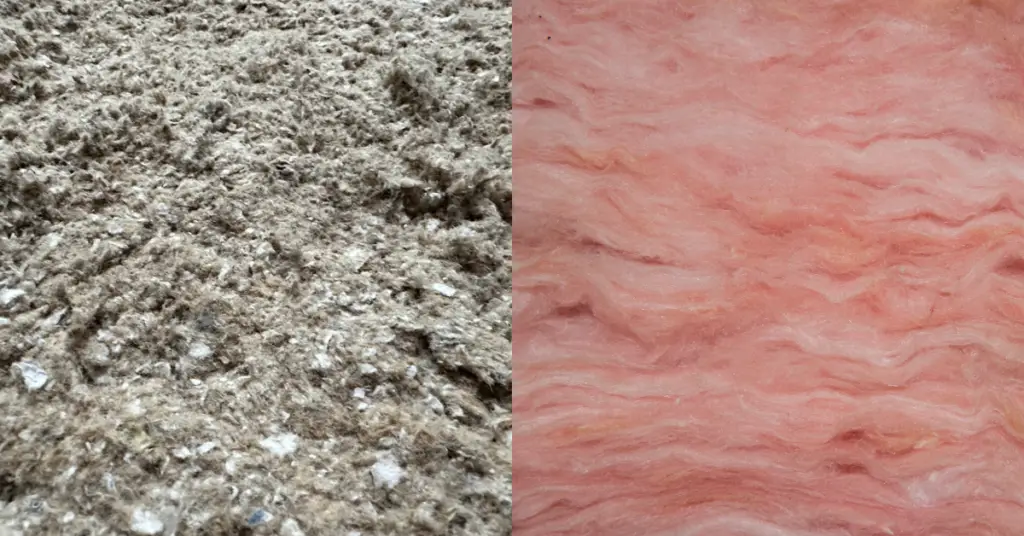
The material-and-thickness line rewards one concrete example: hitting a zone 4 target of R-49 takes roughly thirteen to fourteen inches of blown fiberglass or about thirteen inches of cellulose — different depths, same score, both legitimate. This is why our proposals name the product, the coverage-chart depth, and the bag count, not just the R-number: the R-value is the destination, and the chart is the map that proves the route.
The additive rule is the homeowner’s best financial friend on this whole page: sound existing insulation doesn’t get thrown away, it gets topped — you buy only the gap between what the ruler finds and what your zone requires. The material half of the equation lives in our cellulose vs. fiberglass guide and the method half in the batts vs. blown-in comparison — both materials and both methods serve every zone; the zone just sets the score they must reach.

10.California Insulation Requirements by Zone: The Summary Table
The whole map, condensed (2022–2025 code summary):
| Zone | Attic R-Value | Wall R-Value | Ducts | Floor |
|---|---|---|---|---|
| 3 | R-38 | R-20 or R-13 + 5 | R-8 | R-19 |
| 4 | R-38–49 | R-21 or 13 + 5 | R-8 | R-19 |
| 5 | R-49 | R-21 or 13 + 5 | R-8 | R-19 |
| 6+ | R-49+ | R-21 + foam | R-8 | R-30 |
How to actually use the summary: find your climate zone row, then treat each column as a self-audit checklist for the planes of your own house — attic depth you can measure with a ruler through the hatch, duct wrap you can eyeball on the runs, floor insulation visible from the crawl space. Most homes fail one column while passing the others, and the failing column is where the first dollar goes.
Continuous foam refers to rigid board applied outside the wall sheathing. Two patterns worth carrying out of the table: the duct column never budges — R-8 in unconditioned space is the flat statewide rule, served by our duct insulation work — and the attic column does all the climbing, because the attic plane is where climate differences actually land on a house. Our attic vs. wall comparison explains why that plane carries the weight.

11.Title 24 Compliance Tips for Homeowners
- Get your climate zone confirmed before starting
- Use certified materials with printed R-values
- Insulate attic hatches, ducts, and recessed lights
- Avoid compressing batts or overblowing loose-fill
- Save receipts and request insulation certificates
- Use a contractor familiar with CEC code & documentation
The certificate tip is the sleeper of the six: California installers are supposed to leave documentation of installed R-value — and a contractor who volunteers it before you ask has told you everything about how the rest of the job went. Our version is the photo file: depth rulers, coverage charts, sealed penetrations, every stage timestamped, delivered whether or not anyone asks.
The compression tip deserves its expansion because it’s the most common way good material underperforms its label: batts squeezed into service, loose fill walked flat, or storage boxes parked on the blanket all subtract R-value invisibly. And the contractor tip carries the legal weight — insulation work in California requires the C-2 license, verifiable live at the CSLB (#1138021); the C-2 guide explains why an unlicensed bid isn’t a bargain, it’s a liability.

12.How Attic Shield Helps You Meet Zone Requirements
We’ve insulated homes in every major zone of our region — from beach cottages in San Diego to high-performance homes in Temecula and beyond. With Attic Shield, you get:
- Zone-specific insulation levels (R-38+ where required)
- Blown-in and batt solutions that meet CEC standards
- Sealed and supported duct insulation rated R-8
- Full compliance with Title 24 documentation
- Photos of completed insulation depths for inspections
- Air sealing at penetrations, attic hatches, and returns
- Assistance with rebate and incentive paperwork
Realtors and property managers use the zone map professionally in a way homeowners can borrow: when a listing or a portfolio spans coastal and inland communities, insulation condition gets graded against different targets per address — a ‘fine’ attic in Oceanside can be an under-spec attic in Murrieta with identical inches. The agents page and HOA & property management page cover how we document across the map.
The zone lens also explains why our scopes differ street to street in ways that surprise price-shoppers: a Carlsbad zone 3 attic and a Menifee zone 4 attic with identical square footage carry different targets, different depths, and different bag counts — honestly priced work varies with the map. A quote that never asked your climate zone quoted a house somewhere else.
We work with homeowners, general contractors, and realtors to ensure inspection-ready insulation and sealing — done right the first time. The depth-photo habit is the line that makes the rest verifiable: every scope closes with the ruler in frame, the coverage chart met, and the file in your hands — the same evidence an inspector, a HERS rater, a rebate program, or a future buyer will ask for. The air sealing, removal, and rodent proofing services cover the prerequisites the zone tables assume are handled.

13.Conclusion: Better Insulation Starts With Knowing Your Zone
California’s energy code doesn’t guess — and neither should you. Whether you’re building new, remodeling, or just upgrading your attic, it’s critical to know your insulation zone and install the correct R-values.
Title 24 isn’t optional, but it doesn’t have to be complicated. At Attic Shield, we specialize in climate-appropriate, code-compliant, energy-saving insulation solutions for every region we serve — from coastal zone 3 to the inland valleys of zone 4, across all 70+ communities in San Diego County, Southwest Riverside County, and South Orange County.
Call (858) 402-0066 for a free consultation. Let’s insulate smarter — zone by zone, R-value by R-value.
Whatever your row of the table says, the sequence to reach it never changes: confirm the climate zone, measure what exists, resolve rodents and contamination first, seal the ceiling plane, then insulate to the target with the ruler in the closing photograph. The map tells you the destination; the inspection plots the route.
Book in sixty seconds at the request page — a free inspection, one to two hours, a camera, and a written three-column scope that names your zone, your target, and your gap. The family behind the company answers Monday through Friday 7 to 5 and Sunday 9 to 2, and the live review feed shows how the last several hundred zone-compliant attics went.

14.California Climate Zones — FAQs
What climate zone is San Diego County in?
Coastal and central San Diego County sits in climate zone 3 — mild winters, hot dry summers, coastal breezes — with vented-attic insulation at R-38 under the prescriptive path. Inland valleys to the east and north push into zone 4 conditions, and transition-belt cities like Escondido feel both personalities in a single week; the inspection confirms the exact zone your permit will be graded against.
What climate zone is Temecula in?
Temecula, Murrieta, and Lake Elsinore fall in zone 4 — hotter summers and colder winters than the coast — where R-38 is the attic minimum and R-49 is the recommended target. It’s why our inland installs so often spec deeper than a coastal quote would suggest.
How do I find my exact climate zone?
By address, not by guess: the California Energy Commission publishes the official climate zone boundaries, your local building department confirms the designation for permits, and any Title 24 compliance document ever filed for your property states it outright. Confirming the climate zone is step one of every compliant project — and something we verify as part of the free inspection before any number reaches your proposal.
Do I need more insulation if I already have 3–4 inches?
Almost certainly yes, in every California climate zone — the ENERGY STAR retrofit table treats 3–4 existing inches as merely the halfway case, still calling for R-38-level top-offs in our zones. Existing insulation in good condition can often stay and be blown over; the inspection measures what you have and prices only the gap.
Are R-values really additive?
Yes — R-30 existing plus R-10 added equals R-40 performing, provided the existing layer is dry, uncontaminated, and uncompressed. That additive math is what makes top-offs the best value in insulation: you buy only the missing thermal resistance, not a whole new blanket.
What happens if I insulate below my zone’s R-value?
Three costs arrive in order: the permit can fail inspection, rebate programs can reject the project, and the energy bill quietly collects the shortfall every month afterward. Installing to the zone table — measured after settling, documented in photos — costs the least of the available options.
Does my climate zone change which material I should use?
The zone sets the R-value target; the material and method are how you reach it. Cellulose and fiberglass both serve every California zone — the choice turns on your attic’s conditions, not the map. Our cellulose-vs-fiberglass and batts-vs-blown-in guides settle those questions in depth.
Do rebates depend on my climate zone too?
Utility programs often key incentives to zone-appropriate R-values and verified installation depths, which is one more reason correct climate zone identification pays real money. SDG&E and SoCalGas run active insulation programs, and the ENERGY STAR Rebate Finder catalogs what’s live at your ZIP code — note the federal 25C credit ended for property placed in service after December 31, 2025.
Ready for a free photo-documented inspection?
One to two hours, a camera, and a written scope — no pressure, no obligation, across all 70+ communities we service in San Diego County, Southwest Riverside County, and South Orange County.
or call (858) 402-0066 · Mon–Fri 7–5 · Sun 9–2