 AtticShield


Why every California homeowner needs to understand Title 24. If you live in California and plan to upgrade your home’s insulation, replace an HVAC system, remodel, or build new construction, you will need to comply with Title 24.
Title 24 is California’s official energy code. It sets the rules for energy use in residential and commercial buildings. From attic insulation and ductwork to lighting, windows, and solar systems, Title 24 affects almost every major home upgrade in the state.
In this blog post, Attic Shield breaks down everything you need to know about California Title 24 Part 6: Building Energy Efficiency Standards, including what Title 24 is and why it exists, how it impacts home upgrades, what’s new in the 2022 and 2025 code cycles, attic insulation and air sealing requirements, permits, documentation, and compliance paths — and how Attic Shield ensures your upgrades are legal and efficient. Let’s begin with the basics.
1.What Is Title 24?
Title 24 is part of the California Code of Regulations (CCR) — a set of laws that govern building safety, energy efficiency, accessibility, and more. There are multiple parts to Title 24, but the one that affects energy use is Part 6: Building Energy Efficiency Standards — the full legal text lives at the California Energy Commission’s Title 24 portal.
In simple terms: Title 24 sets the energy rules for all residential and commercial buildings in California.
If you’re insulating your attic, sealing ducts, changing lighting, or replacing windows — you’ll likely need to comply with Title 24. And unlike most building topics homeowners can safely ignore, this one prices itself into your project whether you learn it or not: the code decides what your contractor must install, what your inspector will measure, and what your paperwork must prove.

2.Who Enforces Title 24 and Where Does It Apply?
Title 24 is enforced by:
- Local building departments
- Certified Title 24 energy consultants
- HERS raters (Home Energy Rating System inspectors)
It applies to:
- All new construction
- Additions
- Major remodels
- HVAC and insulation upgrades that require a permit
California is the only state with its own custom energy code (Title 24) built on top of the national IECC standard.
Geography note that saves confusion at the counter: Title 24 applies statewide, but its numbers vary by the state’s 16 climate zones — coastal San Diego, inland Escondido, and Temecula’s valleys each carry zone-tuned targets. Same law everywhere, different numbers by address, which is why a generic internet R-value is a starting point and your permit set is the answer.
The three-enforcer structure explains a pattern that surprises remodelers: your project can satisfy the building department’s plan check and still fail at the end, because HERS verification is a separate, field-tested gate for measures like duct leakage. Compliance isn’t one approval — it’s a chain, and the last link is tested with instruments, not paperwork.
3.What Is Title 24, Part 6?
Part 6 of Title 24 focuses specifically on energy conservation. It was first adopted in 1978 and is updated every three years. It governs:
- Insulation — attic, walls, crawl spaces
- Heating, ventilation, and air conditioning (HVAC)
- Water heaters
- Lighting systems
- Windows, doors, and skylights
- Solar panel requirements (in new construction)
Homeowners sometimes ask which parts of Title 24 they’re ‘allowed’ to ignore in an unpermitted corner of a project, and the honest answer is a reframe: the code’s attic chapter is simply a description of insulation that works — sealed first, deep enough, ventilated, documented. Build below it and the house keeps the receipts either way, on every utility bill until someone fixes it.
Its goal is to help California meet aggressive energy and climate goals by reducing building-related energy usage. The 1978 origin story matters more than trivia: nearly five decades of three-year cycles have compounded into the strictest energy code in the country — each cycle raising the floor a little — which is why a home built to 1985 code and never upgraded sits so far below today’s baseline, and why bringing the attic to current standards produces savings its original builder couldn’t have imagined.
4.Why Title 24 Matters for Homeowners
If you are planning to:
- Add a room or convert a garage
- Replace your attic insulation
- Install a new duct system
- Replace your HVAC system
- Replace more than 50 sq. ft. of windows
- Pull a permit for energy-impacting work
…then you are legally required to comply with Title 24. Benefits of compliance include:
- Lower utility bills
- Better indoor comfort
- Increased home value
- Access to rebates and utility incentive programs
- Avoiding penalties or failed inspections
The home-value line has grown teeth in recent years: buyers’ inspectors flag thin attics, disclosure packages travel with permit history, and an efficiency-upgraded home photographs its compliance — depth rulers, sealed hatches, labeled material — straight into the listing’s story. Code-compliant work done today is equity that shows up at escrow, a point our sellers page and buyers page both make from opposite sides of the table.
Notice the list reads as benefits, not burdens — and that’s the honest frame. The code’s requirements and a homeowner’s self-interest point the same direction: the insulation depth that passes inspection is the same depth that cuts the summer bill, and the duct sealing the HERS rater tests is the same sealing that stops paying to cool the attic. Compliance is mostly just good building with a paper trail.

5.Title 24 vs. IECC vs. ENERGY STAR
| Standard | Title 24 | IECC | ENERGY STAR |
|---|---|---|---|
| Type | State law | Model national code | Voluntary certification |
| Applies to | California only | Most U.S. states | U.S. homes and products |
| Enforced by | Local building officials | States/municipalities | EPA (for certification) |
| Minimum or above-code? | Mandatory baseline | Baseline | Above-code recommendation |
| Purpose | Climate policy + energy savings | National energy standard | Product/home efficiency label |
California’s Title 24 is more aggressive than the IECC and integrates many ENERGY STAR principles into law.
The table’s ‘mandatory baseline’ row also explains why California quotes differ from national averages homeowners read online: bids here price code-required sealing, verification, and documentation that voluntary-standard states can skip. The comparison isn’t apples to apples — it’s law to suggestion — and the cheapest way to buy compliance is a contractor who builds it in rather than bolts it on after a failed inspection.
The practical translation for a homeowner comparing advice online: national articles quoting IECC minimums or ENERGY STAR recommendations describe floors California already builds above. Read them for concepts; read Title 24 for your legal requirements. Our full IECC vs. ENERGY STAR guide untangles the three systems in depth.
6.Title 24 Requirements for Attic Insulation
California requires high-performance attic insulation in all climate zones. Example — Title 24 prescriptive attic insulation for our region’s zones:
| Location | Prescriptive R-value |
|---|---|
| Ceiling (ventilated attic) | R-38 or R-49 |
| Cathedral ceiling | R-30 (min) |
| Roof deck (unvented attic) | R-19 min (with rigid foam) |
| Duct area | R-8 (unconditioned spaces) |
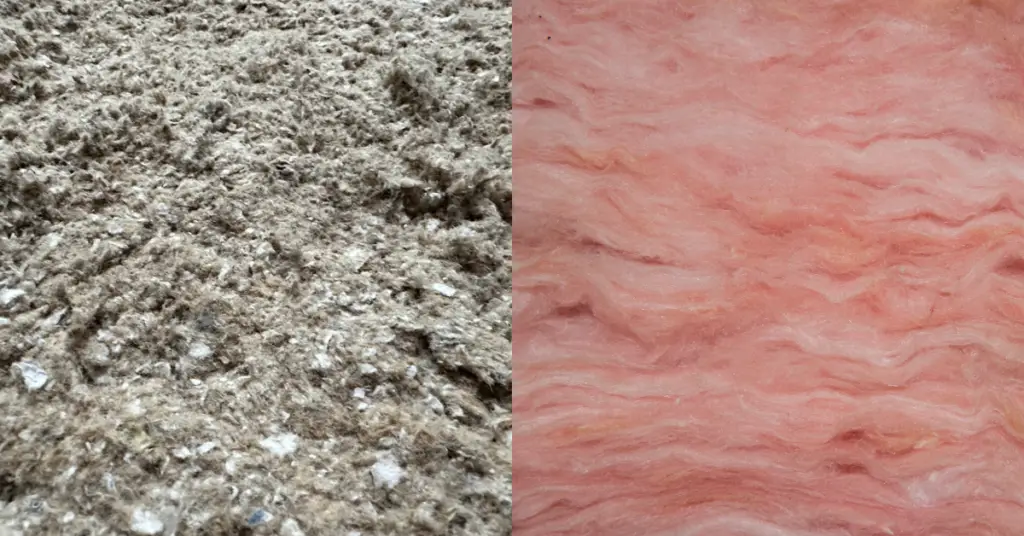
Note: the R-value must be met after compression or settling. Blown-in must be evenly distributed and properly labeled — federal guidance at the Department of Energy’s insulation guidelines runs the same direction. That after-settling clause is the table’s most ignored sentence and the one our crews build around: blowing to the product’s settled-density coverage chart, with the depth ruler in the closing photographs, is what separates installed R-value from advertised R-value. Our typical spec runs to R-44 — above the baseline on purpose, because the crew is already there and the code only rises.

7.Title 24 and Air Sealing Guidelines
Before insulation is installed, homes must be properly air sealed to reduce energy waste. Requirements include:
- Sealing top plates and ceiling penetrations
- Caulking or foaming around pipes and electrical boxes
- Gasketed attic hatches
- Sealing HVAC ducts, boots, and returns
Blower-door testing may be required for HERS verification in certain cases. Homeowners can preview the sealing list themselves in one attic visit: light visible from below at any ceiling penetration, dust-darkened insulation around can lights and top plates, and an attic hatch with no gasket are the three most common finds — each one a Title 24 line item and a monthly energy leak wearing the same address.
The seal-before-insulate order isn’t bureaucratic sequencing — it’s physics with a deadline: every penetration is reachable in the hour before the material lands and buried the hour after. It’s the same order ENERGY STAR teaches and the backbone of our own air sealing service, and it’s why a bid that skips straight to blowing is a bid that plans to bury your leaks.

8.Title 24 and Ductwork Requirements
All ductwork must be:
- Sealed to under 6% leakage (HERS verified)
- Insulated to R-8 in unconditioned spaces
- Supported and installed according to SMACNA guidelines
- Pressure-tested if new or replaced ducts exceed 40 linear feet
Failure to comply can cause a permit to fail final inspection. Ducts earn their own chapter in the code because of where our region builds them: crossing the hottest unconditioned space in the house, where every leak percentage is conditioned air purchased and abandoned. The code’s R-8 and sub-6% numbers are simply the engineering answer to that geography — and the reason duct condition is photographed on every one of our attic inspections regardless of the project’s headline.
The under-6% figure deserves homeowner respect: it’s instrument-tested, not eyeballed, and older systems routinely leak several times that into the attic they cross. Bringing ducts to code through repair or replacement and R-8 duct insulation is frequently the single biggest efficiency line in a whole-attic project — conditioned air belongs in rooms, not rafters.
9.What Changed in the 2022 Title 24 Code?
The 2022 update (effective January 1, 2023) brought the most significant changes in years. Key changes include:
- Mandatory solar panels for new construction (with exceptions)
- Stronger insulation and HVAC efficiency requirements
- Heat pump space heating encouraged over gas
- Whole-house fan controls for night cooling
- Electric-ready panels in new homes
- Electrification incentives and performance credits
Whole-house fans deserve their small spotlight from that list, because they’re a Southern California natural: pulling cool evening air through the house and exhausting attic heat through the ridge, they team with deep insulation instead of competing with it. The 2022 cycle’s control requirements professionalized what inland valley homeowners had improvised for decades — and our attic fan service handles the modern, code-fit version.
The 2022 cycle’s theme was electrification’s opening act — solar mandated, heat pumps favored, panels sized for an electric future. For existing-home owners its practical legacy is the strengthened insulation and HVAC baselines: any permitted work since 2023 has been graded against them, including the attic projects this company runs daily.

10.The 2025 Title 24 Update — Now in Effect
The 2025 Title 24 update took effect January 1, 2026 — adopted by the California Energy Commission in September 2024, it now governs every permit application filed on or after that date, while projects permitted earlier complete under the 2022 code. Key changes now in force:
- A new compliance metric: Long-Term System Cost (LSC) replaces the old Time Dependent Valuation, grading buildings on long-run energy economics
- Expanded heat pump baselines for space and water heating across more building types and climate zones
- Broader solar and battery-storage readiness requirements
- Climate-zone-specific window and door performance requirements replacing single statewide benchmarks
- Continued tightening of insulation, duct, and whole-home performance targets
The metric change is the cycle’s quiet revolution for anyone comparing bids: grading buildings on thirty-year system cost instead of time-of-day energy values rewards exactly the unglamorous measures this guide keeps returning to — envelope depth, sealed ducts, durable performance — over gadgetry that models well and ages poorly. The code now thinks in decades, which is how attics have always worked.
Full current-cycle documents live at the CEC’s 2025 Building Energy Efficiency Standards page. For attic work, the through-line is continuity: the R-value tables, sealing rules, and duct requirements above remain the operative homeowner-level framework, tightened rather than rewritten — and work specified above baseline, like an R-44 attic, clears both cycles without drama.

11.How Title 24 Affects Remodels, Retrofits, and Permits
You’ll need to comply with Title 24 if your project:
- Affects more than 40 ft of ductwork
- Replaces more than 10% of your attic insulation
- Involves lighting upgrades or panel changes
- Includes wall/roof sheathing replacement
- Adds conditioned square footage
Title 24 compliance documentation may include the CF1R energy compliance form, the CF2R installation form, and the CF3R HERS verification form for duct testing — design, installation, and verification, the project’s three-stage paper trail. The 10%-of-attic-insulation trigger is the one homeowners trip most often without knowing: a full removal-and-replace is squarely a Title 24 project, which is why compliance should be built into the scope from the first inspection rather than discovered at the counter.

12.Title 24 Compliance Paths: Prescriptive vs. Performance
1. Prescriptive Path
Follow each measure exactly (e.g., R-38 insulation, 0.30 U-factor windows). Simpler, but less flexible.
2. Performance Path
Use software to model energy use. Allows for trade-offs (e.g., R-30 ceiling + higher SEER HVAC). Required for complex projects.
Your contractor or energy consultant will determine the right path. One vocabulary trap worth defusing: ‘performance path’ does not mean ‘better performing house’ — it means computer-modeled trade-offs against the same energy budget. A prescriptive-path attic at R-49 outperforms a performance-path model that traded the ceiling down to R-30 against fancier equipment. The path is paperwork strategy; the R-value is physics.
For a straightforward attic insulation upgrade, prescriptive is the common road: hit the table’s R-value, seal per the checklist, document, done. Performance modeling earns its complexity on additions and whole-house remodels where trading measures against each other saves real money — either way, the attic numbers in this guide remain the reference points the model negotiates around.

13.How Attic Shield Helps You Meet Title 24 Standards
At Attic Shield, we don’t just install insulation — we ensure it’s done right and code-compliant. We provide:
- Insulation that meets or exceeds Title 24 R-values
- Air sealing with spray foam, caulk, and gaskets
- Photos of work for HERS raters and inspectors
- Accurate material/labor breakdowns for rebate eligibility
- Title 24 documentation support if needed
We work with your GC, HVAC contractor, or energy consultant to ensure nothing gets flagged during final inspection. The photo habit does double duty here: the same documentation that closes every scope for the homeowner is exactly what a HERS rater or building inspector wants to see — depth rulers, sealed penetrations, labeled materials. And the legal foundation under all of it is the license: insulation work in California requires the C-2 classification, verifiable live at the CSLB — #1138021; the C-2 guide explains why anything less is illegal.

14.Official Resources for Title 24
- California Energy Commission — Title 24 Portal
- CEC Blueprint Newsletter
- Title 24 Compliance Forms
- CEC Title 24 Training Resources
- Energy Code Ace (Training and Tools)
For the rebate side of compliance, the ENERGY STAR Rebate Finder catalogs live utility programs by ZIP code — the practical money channel now that the federal 25C credit has ended for property placed in service after December 31, 2025. And for how Title 24 fits the national picture, our IECC vs. ENERGY STAR guide and attic vs. wall comparison continue the reading.
15.Conclusion: Title 24 Isn’t Optional — But Compliance Is Easier with Attic Shield
Whether you’re upgrading insulation, replacing ducts, or remodeling your home, Title 24 is the law in California. It ensures homes are energy-efficient, healthy, and climate-conscious — but it can be complex. The good news? You don’t have to figure it out alone.
At Attic Shield, we specialize in Title 24–compliant insulation, air sealing, and duct system upgrades. We stay up to date on the latest codes and provide everything needed for inspections and incentives — across all 70+ communities we service in San Diego County, Southwest Riverside County, and South Orange County.
Get a free Title 24–compliant estimate today. Call (858) 402-0066 — let’s make your home more efficient, and keep it 100% compliant with California’s toughest code.
Book in sixty seconds at the request page — a free inspection, one to two hours, a camera, and a written three-column scope. The family behind the company answers Monday through Friday 7 to 5 and Sunday 9 to 2, and the live review feed shows how the last several hundred code-compliant attics went. Start with the insulation installation page or the inspection guide to see exactly what the first visit covers.

16.Title 24 — FAQs
Is Title 24 mandatory for my insulation project?
Yes — if your project pulls a permit, adds conditioned space, replaces more than 10% of your attic insulation, or touches more than 40 feet of ductwork, Title 24 compliance is legally required. It’s state law, not a recommendation, and local building departments enforce it at plan check and final inspection.
Which Title 24 code applies to my project right now?
The permit application date decides: permits submitted on or after January 1, 2026 fall under the 2025 Energy Code, while applications filed before that date ride the 2022 code through completion. If your project is mid-stream, your permit paperwork already answers the question.
What R-value does Title 24 require for my attic?
In the prescriptive path for our region’s climate zones, ventilated attic ceilings call for R-38 or R-49, cathedral ceilings a minimum of R-30, and ducts in unconditioned space R-8 — measured after settling, not at fluff. Our typical install targets R-44, comfortably above the baseline.
What are the CF1R, CF2R, and CF3R forms?
The three-stage paper trail of a compliant project: CF1R documents the design-stage energy compliance, CF2R certifies what was actually installed, and CF3R records HERS verification such as duct leakage testing. Permitted energy work generates them in that order, and your files should keep all three.
What is a HERS rater and will my project need one?
A HERS rater is a certified third-party inspector who field-verifies certain measures with instruments — duct leakage under 6%, airflow, and similar tested items — independent of both the contractor and the building department. Duct replacement projects commonly trigger HERS verification; your permit’s compliance forms state whether yours does, and the CF3R form records the result.
Do rebates still exist for Title 24 insulation work?
Yes — utility and state programs remain active: SDG&E and SoCalGas offer insulation and efficiency rebates, and the ENERGY STAR Rebate Finder catalogs current programs by ZIP code. The federal 25C tax credit ended for property placed in service after December 31, 2025, so live money now flows mainly through those utility channels.
Does Title 24 apply if I skip the permit?
Legally required work doesn’t become optional by avoiding the counter — unpermitted energy work risks stop-work orders, forced corrections, disclosure problems at sale, and insurance complications. The honest path is a contractor who builds compliance into the scope so the permit passes the first time.
Who is responsible for Title 24 compliance — me or my contractor?
The property owner carries the legal obligation, which is exactly why contractor selection matters: a C-2 licensed insulation contractor who knows the code’s R-values, sealing rules, and documentation keeps your project compliant by construction rather than by correction. Verify any license live at the CSLB before signing.
Ready for a free photo-documented inspection?
One to two hours, a camera, and a written scope — no pressure, no obligation, across all 70+ communities we service in San Diego County, Southwest Riverside County, and South Orange County.
or call (858) 402-0066 · Mon–Fri 7–5 · Sun 9–2