 AtticShield


If you’re a homeowner in San Diego County looking to upgrade your attic insulation, you’ve likely come across two of the most common materials on the market: cellulose and fiberglass. While both are widely used in residential construction and retrofits, they have key differences in performance, material composition, installation method, and environmental impact.
So which one is better for your home?
In this comprehensive guide, we’ll walk you through everything you need to know about cellulose insulation vs fiberglass insulation, so you can make the smartest choice for your attic, your energy bill, and your long-term comfort.
1.What Is Cellulose Insulation?
Cellulose insulation is made from recycled paper products — mostly old newspapers — which are shredded and treated with a fire retardant such as boric acid. The result is a dense, eco-friendly, fire-resistant loose-fill material that can be blown into attics or dense-packed into walls. Key benefits:
- Made from 85% recycled materials
- Treated to be fire-, pest-, and mold-resistant
- Blown-in application fills hard-to-reach gaps
- Provides excellent soundproofing
- Higher R-value per inch than most fiberglass products
How the product arrives matters to picture, too: cellulose insulation ships compressed in bags, feeds through a blowing machine that fluffs and aerates the fiber, and travels a long hose to the attic where a technician distributes it in controlled lifts. The machine’s settings — air mix, feed rate — are part of the craft; the same bag blown badly delivers a different attic than the same bag blown well, which threads back to the theme this article keeps landing on.
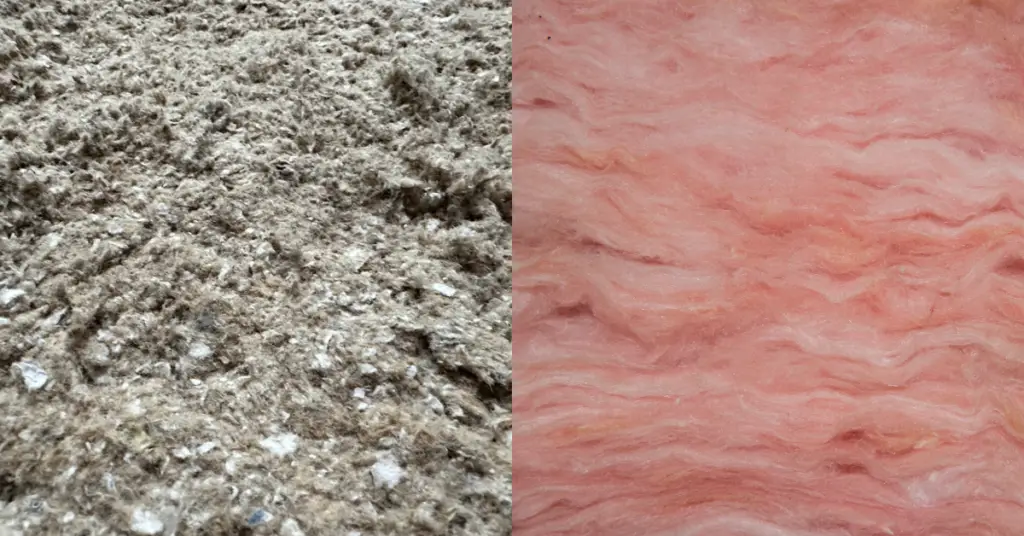
A short history explains cellulose insulation’s odd origin story: insulating with plant fiber is genuinely old — shredded paper, sawdust, and straw filled walls long before modern codes — and the material’s modern era began when fire-retardant treatment standards professionalized it in the 1970s energy crisis. Today’s product is manufactured to specifications, tested to the same federal standards as every competitor, and installed by the truckload across America. The recycling story is charming; the engineering underneath it is what earns the material its place in your attic.
The borate treatment deserves a sentence of respect, because it’s the ingredient that turns yesterday’s newspaper into a building material: borates give cellulose insulation its fire rating, its pest resistance, and its mold resistance in one chemistry — a mineral treatment, not a coating, distributed through the fiber itself. It’s also why the ‘it’s just paper’ objection misses: treated cellulose behaves nothing like the newspaper it started as.
2.What Is Fiberglass Insulation?
Fiberglass insulation is made by spinning molten glass into thin fibers and forming it into batts (rolls) or loose-fill particles for blown-in applications. It’s one of the most common types of insulation in the U.S. due to its wide availability, affordability, and fire resistance. Key benefits:
- Made from glass and sand, often with recycled content
- Naturally non-combustible
- Resists moisture and mold
- Available in both batts and blown-in forms
- Typically more budget-friendly than cellulose
Handling profiles differ in ways installers feel more than homeowners do: modern fiberglass products are dramatically friendlier than their itchy ancestors, while cellulose runs dustier during installation — both managed with the respirators, containment, and cleanup discipline that professional crews bring regardless. Neither material leaves a well-run jobsite in your living space; that’s what the barriers and HEPA vacuums are for.

Fiberglass’s own history runs through the same arc from the other direction: invented in the 1930s, it became the default American insulation precisely because it manufactures consistently at enormous scale — every batt and bag behaving predictably, decade after decade. When contractors call it the ‘known quantity,’ that is a compliment earned across ninety years of attics.
Fiberglass’s superpower is what it doesn’t do: it doesn’t burn, doesn’t absorb water, doesn’t feed anything, and doesn’t decompose. Glass is chemically boring in exactly the ways a building material should be — and the modern formaldehyde-free products have shed the old-generation drawbacks that gave the material its itchy reputation.
3.Head-to-Head: Cellulose Insulation vs Fiberglass Insulation
Here is the complete comparison, feature by feature:
| Feature | Cellulose Insulation | Fiberglass Insulation |
|---|---|---|
| Material | Recycled paper (mostly newspaper) | Spun glass fibers |
| R-Value per inch | 3.2 – 3.8 | 2.2 – 2.7 (batts), 2.9 – 3.2 (blown-in) |
| Soundproofing | Excellent | Good |
| Fire resistance | Good (treated with borates) | Excellent (naturally non-combustible) |
| Moisture resistance | Fair (can absorb water) | Excellent (non-absorbent) |
| Pest resistance | Treated to resist rodents & insects | Naturally pest-resistant |
| Settling over time | Yes (can settle 20% or more) | Minimal |
| Installation method | Blown-in only | Blown-in or batt |
| Environmental impact | Very eco-friendly (up to 85% recycled) | Less eco-friendly (20–40% recycled) |
| Cost | Moderate to high | Generally more affordable |
| Lifespan | 20–30 years | 30+ years (if undisturbed) |
Two rows deserve asterisks before anyone weaponizes them in a sales pitch. The lifespan row assumes ‘if undisturbed’ — and Southern California attics get disturbed: rodents tunnel, roofers trample, cable installers wade, and moisture events happen to both materials equally. And the settling row, as Section 8 explains, is a solved problem when the installer follows the coverage chart. Table rows are conversation starters, not verdicts.
Read the table the way an estimator does: no column sweeps. Cellulose insulation takes R-per-inch, sound, coverage, and environment; fiberglass takes fire, moisture, settling, lifespan, and price; and the two rows that decide most real projects — installation method and your attic’s actual geometry — aren’t material properties at all. That’s the whole reason this article ends with an inspection instead of a verdict.
4.Which Insulation Performs Better in San Diego County?
San Diego’s mild coastal climate combined with hot inland summers makes energy efficiency a top priority for homeowners. Here’s how cellulose and fiberglass perform in real-life San Diego homes:

Energy Efficiency
If your goal is maximum energy savings, cellulose insulation has a slight edge due to its higher R-value per inch — less material is needed to achieve the same level of thermal resistance. That edge matters most in height-limited attics, where the framing caps how many inches will fit and every inch has to deliver.
Solar-era attics add a new wrinkle worth flagging for anyone with panels or planning them: rooftop solar means periodic contractor traffic through your attic for conduit and inspection access, which argues for maintaining walkable service paths and choosing material placement that tolerates the occasional visitor. It also makes the buried-conduit clearance check part of our pre-install routine on panel homes — a sentence that didn’t exist in this trade fifteen years ago.
Duct interaction adds a quiet performance wrinkle in our region’s attics: most Southern California ductwork runs through the attic itself, and deep insulation of either material partially buries supply runs — usually a benefit, softening the brutal attic-to-duct temperature gap, provided the ducts were sealed and sound before the material arrived. It’s another before-you-cover item the inspection checks, and another reason duct repair sequences ahead of insulation when both are needed.
One efficiency subtlety worth knowing: R-value per inch matters differently depending on your constraint. If your attic has unlimited height, either material reaches any target — fiberglass just needs more inches, and inches are cheap. If your attic is height-limited at the eaves or under a low roofline, cellulose insulation’s denser rating per inch becomes a genuine structural advantage rather than a spec-sheet bragging right.
Air Sealing and Coverage
Blown-in cellulose is denser and settles better into tight cavities and gaps, making it an excellent air barrier — ideal for older homes with uneven or hard-to-reach spaces in the attic. It’s worth being precise here, though: density resists airflow, but it doesn’t replace real air sealing of the ceiling plane, which both materials need underneath them to perform at their rated value.
Removal history also shapes the choice more than spec sheets admit. If your project starts with contaminated material coming out — rodents, moisture, or age — the attic arrives at decision day as a bare, sealed, sanitized deck, and both materials compete on even ground. If your existing insulation stays, compatibility and topping logic enter: what’s already there, its condition, and how the new layer will behave over it. The removal question and the material question are one conversation wearing two hats.
Coverage quality is also where older San Diego housing stock tilts the field. Pre-1980 attics in neighborhoods from North Park to Old Escondido tend toward irregular framing, added-on wings, kneewalls, and obstructions accumulated across decades of remodels — geometry where blown-in material of either type outperforms batts, and where cellulose insulation’s density around penetrations shines brightest. The newer the tract, the more regular the framing, the more evenly the materials compete.
Rodent Resistance
Fiberglass doesn’t offer food or nesting material for rodents, while cellulose insulation is treated to repel pests. In areas prone to rodent activity, either material can be effective, but proper rodent proofing is more important than insulation type — steel at every entry point, never foam alone, as the rodent proofing standard details. No insulation material seals a hole.
Fire Safety
Fiberglass is naturally non-flammable, making it a better option if fire resistance is your top concern. However, cellulose that’s treated with borates also meets fire safety standards — both materials pass; they simply pass by different routes.
Weight is the comparison row nobody prints but older ceilings care about: cellulose insulation’s density means a full R-44 blanket weighs meaningfully more than its fiberglass equivalent, and while any sound ceiling handles either easily, a sagging or previously damaged drywall plane is worth noting during inspection before the heavier material lands on it. One more example of the building voting on the material.
A fire-safety footnote for older homes specifically: whichever material you choose, the pre-install inspection checks recessed fixtures, flues, and junction boxes — because the fire risk in real attics comes from insulation contacting heat sources it shouldn’t, not from the material’s spec sheet. Clearances and dams are the fire safety that matters on installation day, for glass and paper alike.
Moisture and Mold
Fiberglass resists moisture and does not support mold growth, which can be useful in coastal areas of San Diego where humidity levels rise. Cellulose insulation can absorb moisture, making ventilation and professional installation crucial — and making the pre-install inspection’s moisture check more than a formality in beach-adjacent ZIP codes.

5.Environmental Considerations
Both insulation types have environmental pros and cons:
- Cellulose is made from post-consumer waste, which reduces landfill usage and carbon footprint. It’s the most eco-friendly insulation option widely available today.
- Fiberglass uses less recycled content overall but has improved significantly in recent years. Many brands now offer formaldehyde-free fiberglass with better sustainability profiles.
End-of-life rounds out the environmental picture: cellulose insulation that comes out clean decades from now is biodegradable paper fiber, while fiberglass persists — though in practice, most removed insulation of either type exits through contamination and leaves as regulated waste regardless. The honest environmental verdict is won or lost during the material’s service life, not its afterlife.
For homeowners weighing the sustainability claim seriously, the numbers behind ‘85% recycled’ are worth a moment: a typical attic’s worth of cellulose insulation diverts a substantial volume of paper from landfill and locks its carbon into your ceiling for decades — a small, real climate contribution that happens to also lower your energy bill. Green marketing is everywhere in construction; this is one of the few places where the material genuinely walks the talk.
There’s also the embodied-energy angle for homeowners who count carefully: cellulose manufacturing consumes far less energy than melting glass, so its footprint advantage runs through production as well as content. And either material’s greenest feature is the same one — decades of reduced HVAC consumption that dwarfs whatever it took to make the material in the first place. The most sustainable insulation is a properly installed one.
6.Installation Process: What to Expect
At Attic Shield, we offer both fiberglass and cellulose insulation installation. Here’s what the process typically involves.
Cellulose Insulation Installation
- Remove existing insulation, if necessary — through the sealed 35-HP extraction process the removal page documents
- Seal air leaks and entry points
- Sanitize the attic space where contamination calls for it
- Blow in cellulose to the recommended R-value — verified against the product’s coverage chart, with the ruler in the photo
- Clean up and take post-job photos

The dense-pack variant deserves its own mention since walls behave differently than attics: in closed wall cavities, cellulose insulation can be dense-packed through small access holes — the technique behind our wall injection service — filling irregular cavities that batts could never be fished into. It’s the material’s signature trick, and one fiberglass loose-fill performs less reliably at the same densities.
Fiberglass Insulation Installation
For batt insulation: careful fitting between framing members — cut around obstructions, no gaps, no compression, because a batt only delivers its rating when it fills its cavity properly. For blown-in fiberglass: a similar process to cellulose with different blower settings and its own coverage chart. Both options take one day or less to complete for most San Diego homes, and both close the same way — with photographs of what’s about to become invisible.

7.Pros and Cons Summary
Cellulose Insulation Pros
- High R-value per inch
- Great air-resistance and soundproofing
- Eco-friendly
- Ideal for tight and irregular spaces
Cellulose Cons
- Can settle over time
- May absorb moisture
- Requires careful, chart-verified professional installation to perform as rated
Fiberglass Insulation Pros
- Non-combustible and moisture-resistant
- Long lifespan
- More budget-friendly
- Readily available
Fiberglass Cons
- Lower R-value per inch
- Gaps can occur with batt installation
- Less eco-friendly
Allergy and air-quality questions come up weekly, so the straight answer: neither material, properly installed above a sealed ceiling plane, sheds into your living space — the sealing is the point. Sensitive households sometimes prefer one material’s profile over the other, and that preference is welcome in the scoping conversation; what actually protects your indoor air is the sealed boundary between attic and home, which every install we run builds first.
Sound deserves one more paragraph than comparisons usually give it, because it’s the benefit people notice second and mention first. Dense cellulose insulation above a ceiling audibly softens aircraft, traffic, and neighborhood noise — the ‘excellent’ in the table’s soundproofing row is a lived difference in flight-path neighborhoods from Point Loma to Santee. Fiberglass helps too; density is simply what sound absorption loves, and cellulose has more of it.
Homeowners sometimes ask for the ‘secret’ industry opinion behind lists like these, so here it is, unglamorous as ever: crews who install both materials weekly stop having a favorite. The bags change; the discipline doesn’t — coverage charts, depth verification, ventilation preserved, clearances respected, photographs taken. Material tribalism is a marketing phenomenon, not a jobsite one.
Notice that every con on both lists is either managed by professional installation or priced into the recommendation — settling is handled by settled-density specs, moisture by ventilation and assembly choice, batt gaps by craftsmanship, R-per-inch by depth. Cons are not disqualifiers; they are line items in the scoping conversation.
8.The Settling Question, Answered Properly
The table’s settling row scares more homeowners than it should, so here is the full picture. Yes — loose-fill cellulose insulation settles as it ages, and the industry has known it for decades; that is precisely why every cellulose product publishes two numbers on its coverage chart: initial installed thickness and settled thickness. A professional crew blows to the initial number so the settled number still meets your target R-value — the settling is pre-paid, in material, on day one.
Fiberglass earns its ‘minimal settling’ row honestly — spun glass holds its loft — but it carries a cousin vulnerability worth naming for fairness: wind-washing at open eaves and disturbance from foot traffic can degrade low-density blown fiberglass coverage over the years, which is why perimeter baffling and staying off the insulation matter for both materials. Every material has physics; good installation is the answer to all of it.

The failure mode isn’t the material; it’s installers who blow to the settled depth and leave, letting physics quietly shave the R-value over the following years. It’s one of the clearest examples of a truth that runs through this whole comparison: installation quality moves performance more than material choice does. A perfectly installed second-choice material outperforms a carelessly installed first choice every time.
9.Our Recommendation: Which Should You Choose?
If your home has a tight attic space, is older, or suffers from heat retention in the summer, blown-in cellulose offers superior coverage and comfort. For newer homes or remodels on a budget, fiberglass is a perfectly suitable, cost-effective choice — especially if moisture is a concern.
At Attic Shield, we help homeowners across San Diego County, Southwest Riverside County, and South Orange County — from San Diego to Temecula to Lake Elsinore — choose the right insulation material based on their attic structure, home layout, and energy goals. We never push one solution for every home. Instead, we focus on what will deliver long-term value, efficiency, and peace of mind.
There is no best insulation — only the best insulation for your attic. The building decides; we translate.
What tips the scale in practice, attic by attic: available height (cellulose’s R-per-inch wins low attics), framing complexity (blown-in of either type beats batts around obstructions), moisture exposure (coastal humidity favors fiberglass or demands assembly care with cellulose), rodent history (the exclusion conversation comes first regardless), existing material (topping over is often fine per ENERGY STAR guidance), and budget. Six inputs, one honest output.
10.How the Decision Actually Gets Made: The Inspection
A brief word on the materials this comparison leaves out, since estimates sometimes float them: mineral wool brings excellent fire and sound performance at a premium and has its place in specific assemblies — we install it where the scope calls for it. Spray foam, for typical vented Southern California attics, is a tool we advise against — cost, serviceability, and fit-to-assembly reasons covered in our material guides. The cellulose-vs-fiberglass question dominates because those two materials fit the region’s dominant attic type best.
Everything above is general; your attic is specific — and the bridge between them is the free inspection. One to two hours with a camera produces the facts the material decision runs on: measured existing depth and its condition, framing dimensions and clearance, moisture evidence, rodent evidence, ventilation paths, and the access the crew will work through. Then the written three-column scope names the material, the method, the target R-value — typically our R-44 standard, above the Title 24 baseline — and the reasons, in plain language you can compare against any other bid.
Hybrid answers exist too, and good scopes use them without ceremony: batts in the clean accessible wings with blown-in material across the obstructed core; existing fiberglass topped with cellulose insulation for the R-per-inch boost where height runs short; different detailing for the garage-adjacent bay than the main field. ENERGY STAR’s guidance explicitly blesses mixing types over each other — the attic is allowed to have more than one right answer in different corners.
Here is what the inspection’s facts look like when they collide with the theory, in three composite homes we see weekly. The 1962 Clairemont ranch: low rooflines, three remodels’ worth of odd framing, rodent history — exclusion first, then blown-in cellulose for the coverage and R-per-inch. The 2015 Menifee two-story: clean regular framing, brutal inland summers, budget-focused owners — blown-in fiberglass to R-44, no drama. The Carlsbad beach cottage: marine air, mild temperatures, a moisture reading worth respecting — fiberglass, plus ventilation attention. Three houses, three honest answers, one method for reaching them.
Bring your priorities to that conversation: if environmental impact leads for you, say so and cellulose insulation likely rises; if budget leads, fiberglass probably does; if you simply want the attic to stop cooking the bedrooms, either will — installed right. Homeowner preference is a legitimate input whenever the assembly allows it, and when it doesn’t, we’ll show you why in the photographs rather than asking you to take our word.

11.Why Homeowners Choose Attic Shield
- Licensed C-2 insulation contractor — CSLB #1138021, verify it live; our C-2 license guide explains why the classification is legally required for this work
- Free attic inspections with photo documentation
- Professional insulation removal and cleanup
- Full attic sanitization and rodent-proofing
- Same-day or next-day service
- Financing options available
- Serving all of San Diego County, Southwest Riverside, and South Orange County — the full 70+ community map

12.Request Your Free Estimate Today
Timing your decision has one honest rule: the best month to fix an under-insulated attic was before last summer’s bills, and the second best is now — because unlike rebate windows and material prices, the physics never goes on sale. Whichever season you read this in, the inspection is free, the scope is written, and the attic starts paying you back the week the material lands.
One more comparison-shopping tip that costs nothing: when you gather bids, make every bidder name their material, product, target R-value, and initial installed depth in writing — then compare like against like. The commonest estimate trick in this trade is quoting a vague ‘insulation to code’ that lets the cheapest interpretation win after signing. A scope that names its numbers is a scope you can hold; a scope that doesn’t is a price with an escape hatch.
Still unsure whether cellulose or fiberglass is right for your attic? Let us help you decide. Schedule a free attic evaluation with our team and we’ll walk you through every option — showing you photos, R-value recommendations, and a clear written scope with everything itemized. Book in sixty seconds at the request page or call (858) 402-0066 — the family behind the company answers Monday through Friday 7 to 5 and Sunday 9 to 2, and the live review feed shows how these decisions have landed for hundreds of your neighbors.
13.Final Thoughts
The debate between cellulose insulation vs fiberglass insulation doesn’t have a one-size-fits-all winner. Both options offer unique strengths — and when installed by a trusted professional like Attic Shield, you can’t go wrong. The key is selecting the right material for your home’s structure, budget, and long-term comfort goals.
And whichever material wins your attic, remember what this entire comparison sits on top of: the ceiling plane sealed before material covers it, ventilation preserved at the eaves, clearances respected at every fixture, contamination resolved before anything new goes in, and depth verified against the product’s own chart with a camera watching. Those five disciplines move your energy bill more than the cellulose-or-fiberglass decision ever will — which is the most useful sentence in this article, and the reason the free inspection exists.
For the wider decision context, our batts vs. blown-in comparison covers the method question, the attic vs. wall guide covers where to insulate first, and the installation service page covers exactly how the chosen material goes in. And whichever way your attic argues, the sequence around the material — seal, sanitize where needed, insulate, photograph — is what turns a bag of anything into performance.
Let’s create an attic that works for you — not against you.

14.Cellulose Insulation vs. Fiberglass — FAQs
Which has the higher R-value: cellulose insulation or fiberglass?
Cellulose insulation runs roughly R-3.2 to R-3.8 per inch, while fiberglass runs about R-2.2 to R-2.7 in batts and R-2.9 to R-3.2 blown-in. Per inch, cellulose wins — but both reach any code target with enough depth, so the per-inch number matters most in height-limited attics where every inch has to earn its keep.
Is cellulose insulation safe for homes with rodent history?
Cellulose insulation is treated with borates that repel pests, and fiberglass offers rodents no food value — but neither material stops a rodent, and neither claims to. Proper rodent proofing — steel at every entry point — matters far more than insulation type; material installed into an unsealed structure becomes nesting stock regardless of what it’s made of.
Does cellulose insulation really settle 20%?
Loose-fill cellulose can settle meaningfully over time, which is why professional installers blow it to a settled-density spec — installing extra initial depth so the settled thickness still meets the target R-value. That’s printed on every product’s coverage chart, and it’s one of the clearest reasons this material rewards professional installation.
Is fiberglass insulation fireproof?
Fiberglass is naturally non-combustible — it’s spun glass. Borate-treated cellulose insulation also meets fire safety standards; the treatment is precisely what makes recycled paper safe to install around a home. Both pass; fiberglass simply passes without needing a treatment to do it.
Which is better for coastal San Diego homes?
Moisture behavior is the coastal question: fiberglass doesn’t absorb water, while cellulose insulation can — so in humid coastal zones, ventilation, air sealing, and installation quality decide whether cellulose’s other advantages stay advantages. Both materials succeed in coastal homes every week; the assembly around them is what makes the difference.
Can you install one material over the other?
Often yes — new blown-in material can typically go over suitable existing insulation of a different type, per ENERGY STAR’s guidance. Condition rules the decision: clean and dry can stay and be topped; contaminated or moisture-damaged material comes out first.
How long does installation take?
Both options take one day or less to complete for most San Diego homes — a straightforward prepared attic moves fast, while removal-first or heavy air-sealing projects can extend the schedule. The inspection produces the realistic timeline for your attic, and the crew confirms it before the first bag opens.
What does Attic Shield actually recommend?
Whichever material the attic argues for. Tight, irregular, older spaces lean cellulose; budget-driven remodels and moisture-exposed assemblies lean fiberglass; many homes could genuinely succeed with either, and we say so when it’s true. We install both, we explain the tradeoffs in plain language, and we put the recommendation — and its reasons — in the written scope where you can hold it against any competing bid.
Ready for a free photo-documented inspection?
One to two hours, a camera, and a written scope — no pressure, no obligation, across all 70+ communities we service.
or call (858) 402-0066 · Mon–Fri 7–5 · Sun 9–2