 AtticShield

The growing debate over spray foam in homes. Spray foam insulation is often marketed as the ultimate solution for home energy efficiency. It’s praised for its high R-value and air sealing capabilities. But when it comes to residential homes — especially in climates like Southern California — spray foam may not be the best option. In fact, it can create more problems than it solves.
At Attic Shield, we’ve worked on hundreds of homes where spray foam had to be removed due to hidden moisture, odor problems, HVAC complications, or even home resale issues. This article will break down why spray foam insulation is not ideal for residential homes, what the alternatives are, and how to make the best choice for your home’s energy needs.
1.Spray Foam Is Permanent — and That’s Not Always Good
Spray foam insulation becomes a hard, rigid material that sticks to your rafters, joists, and drywall. This “permanent” nature means:
- You cannot remove it easily without expensive labor and tools
- You can’t inspect what’s behind it — wiring, mold, leaks, or rodent activity
- It traps issues like roof leaks or moisture, allowing damage to fester unseen

Unlike blown-in or batt insulation that can be removed, updated, or adjusted, spray foam is “forever” — even when it’s causing problems.
Open-cell and closed-cell deserve their footnote before the reasons continue, because foam’s defenders often retreat between them: open-cell is softer, cheaper, and vapor-permeable; closed-cell is denser, higher R-per-inch, and vapor-tight. The distinctions matter to installers — and change nothing in this article’s argument, because both versions share the traits every reason below turns on: adhesion to structure, resistance to removal, and concealment of everything behind them.
Rodents give the inspection problem its sharpest edge in our region: activity behind foam is invisible until it’s audible — or until wiring damage announces it — and exclusion work that requires reaching the roofline’s interior geometry meets a coated surface instead. An attic you can’t inspect is an attic whose rodent story you learn late, and late is the expensive chapter.
Permanence sounds like a selling point until you meet the houses where it wasn’t: the whole logic of a serviceable attic — inspect it, correct it, upgrade it as codes rise — assumes you can reach the structure. Foam converts your roof framing from an accessible system into a sealed exhibit, and every future decision about that attic inherits the constraint. Reversibility is a feature homeowners don’t price until they need it.

2.It Makes Roof and HVAC Repairs More Complicated and Costly
In a spray foam-insulated attic (especially closed-cell foam), your HVAC system and roof framing are sealed in tight. If you or a contractor needs to:
- Run new electrical wiring through the attic framing
- Replace or reroute ductwork
- Repair a roof leak or replace roof decking
Roof decking replacement deserves its own line in that list because Southern California’s reroofing rhythm makes the encounter inevitable: most roofs here are replaced at least once in an ownership generation, decking sections routinely need swapping during the job, and closed-cell foam bonded to the underside converts a plywood swap into a demolition detail. Homeowners rarely learn this until the roofing bid arrives with an asterisk.
They’ll have to cut through dense, hardened spray foam — and that means extra time, labor, and mess. HVAC companies often charge more or refuse to work on homes where spray foam blocks access to systems. The refusal half of that sentence is the underrated half: trades price risk, and an attic where every task begins with demolition attracts either premium bids or polite declines. Your home’s maintenance market quietly shrinks the day the foam cures.
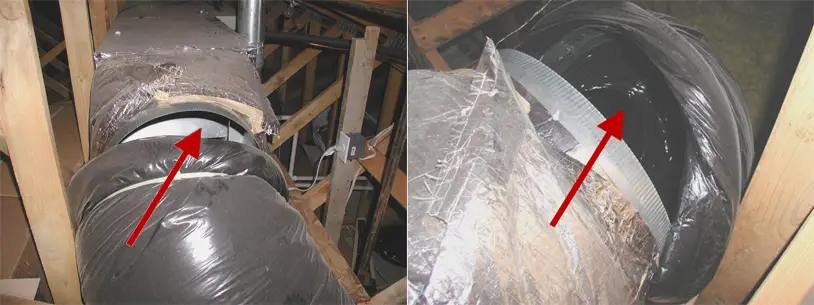
3.Spray Foam Can Void Roof Manufacturer Coverage
Many roofing manufacturers and installers will not stand behind a roof if spray foam is applied directly to the underside of the roof deck. Why?
- Spray foam raises the temperature of roofing materials due to reduced ventilation
- It traps moisture, which can rot decking from the inside out
- It hides issues from roofers who rely on visible damage to make assessments
The ventilation mechanism behind the temperature claim rewards a plain-language pass: a vented attic continuously carries heat off the underside of the roof, and shingles were engineered with that relief in mind. Deck-applied foam removes the relief — the roofing bakes from both sides — and material aging accelerates in ways manufacturers never priced into their coverage terms. The moisture half is worse: vapor that once rode ventilation out now meets a vapor-tight boundary at the coldest surface in the assembly.
In states like California, where the climate can go from coastal humidity to inland dryness, this risk is elevated. Your roofing contractor may walk away from covering the roof altogether if they see spray foam in your attic — and the economics deserve a plain sentence: a roof is one of the largest single components of your home, and an insulation choice that puts its manufacturer backing in question has to clear a very high bar of benefit to justify the wager. In this climate, it doesn’t.
4.Spray Foam Requires a Conditioned Attic — and That’s a Big Expense
Spray foam insulation converts your attic into a conditioned space. That sounds good in theory — but in reality, it means:
- You’ll need to air seal and insulate the entire building envelope, not just the attic
- You may need to install dedicated HVAC for the attic (vents, returns, etc.)
- You’re committing to a fully sealed system that must be monitored for air quality, temperature, and moisture
The monitoring commitment is the conversion’s longest tail: a sealed, conditioned attic is a system that must keep working — humidity watched, temperatures managed, equipment maintained — for as long as the house stands. A vented attic with floor insulation is, by contrast, gloriously passive: gravity, airflow, and material depth doing their jobs with no dashboard. Passive systems fail gracefully and cheaply; active systems fail like appliances.
In most homes, that means major HVAC redesign and added costs. For example, you may need:
- A new air handler or mini split for the attic
- Condensation management systems
- Dehumidifiers for seasonal changes
All this adds up quickly — and it’s not necessary with more flexible, breathable insulation types. Solar-panel households meet this expense from an extra angle, too: panel service, inverter conduit, and roof work all route through or over the attic, and a conditioned foam assembly complicates every touchpoint — the region’s rooftops are only getting busier, which makes attic accessibility a rising asset and foam’s constraints a rising cost. What the sales pitch calls “an insulation upgrade” is actually a building-science conversion: you’re not adding a material, you’re changing which side of the thermal boundary an entire room lives on, with all the mechanical obligations that follow. Vented attics with deep floor insulation solved this problem a century ago without a monitoring system.
5.Moisture Problems and Odors Can Be Trapped Forever
One of the most common issues we see with spray foam insulation in residential homes is trapped odors and moisture.
- If the home had a prior roof leak, rodent activity, or poor ventilation, those odors get sealed into the foam
- Foam that was installed over damp wood or moist drywall often results in musty smells that never go away
- In some cases, homeowners report a chemical smell that lasts for years, especially if the foam wasn’t mixed or cured properly
Since spray foam cannot be easily removed, the only fix is full demolition — costing thousands in labor and repairs.
Ventilation is the third casualty in these attics and it compounds the first two: deck-applied foam typically closes the soffit-to-ridge airflow that once carried moisture out, so any water that does enter — roof penetration, plumbing event, exhaust-fan mistake — meets an assembly with no drying mechanism. Conventional vented attics forgive water events by moving air; sealed foam assemblies adjudicate them by growing things.
The chemical-smell cases are the ones that haunt this category, because their cause is invisible at install time: ratios drift, a batch cures wrong, and the evidence emerges over the following weeks as an odor with no visible source and no removable component. Families end up negotiating with their own ceiling. It’s a small percentage of installs — and a life-altering one for the households inside the percentage.
Contrast the failure modes honestly: when conventional insulation gets contaminated, the remedy is removal, sanitization, and fresh material — a solved, routine sequence. When foam seals a problem in, the remedy is construction. Same underlying issue, wildly different exits, and you choose the exit years before you know whether you’ll need it.

6.Off-Gassing and Air Quality Concerns
Spray foam is made with chemicals like isocyanates, which can cause irritation, respiratory issues, and more. While these chemicals are supposed to dissipate after installation, poor application or improper curing can lead to off-gassing that:
- Lingers in the home for months or even years
- Causes allergic reactions, irritation, or headaches
- Creates long-term concerns for sensitive individuals or children
The dissipation promise also assumes a schedule real houses don’t always follow: proper curing wants specific temperatures and ventilation during and after application — conditions a 130°F July attic or a rushed install day can violate. When that window is missed, the ‘temporary’ phase of the chemistry stops being temporary, and the family downstairs runs the experiment nobody signed up for.
The children-and-sensitive-individuals line deserves its weight: bedrooms sit directly beneath attic assemblies, respiratory systems vary enormously across a household, and an insulation choice is one of the few home decisions that literally surrounds your family’s sleeping air for decades. Reasonable people weigh that differently — but weighing it requires knowing the material was manufactured in place by that day’s conditions, a fact the glossy brochures reliably omit.
It’s no surprise that many eco-conscious homeowners are turning away from spray foam in favor of formaldehyde-free fiberglass or cellulose insulation. The structural point under the health point: foam is the only mainstream insulation manufactured on site, in your attic, by a two-part chemical reaction whose quality depends on that day’s ratios, temperatures, and technician. Every alternative arrives factory-made and inert; EPA’s guidance on weatherization and indoor air quality is a worthwhile read on why what you install becomes what you breathe.
7.Spray Foam Is Overkill in Mild Climates Like Southern California
In colder regions, spray foam’s high R-value and air sealing can make a big difference. But in Southern California’s moderate climate, it’s often unnecessary. Most homes here benefit just as much from:
- Proper air sealing
- Balanced attic ventilation
- Blown-in or batt insulation with a proper R-value
There’s a rebate-and-code angle hiding here as well: California’s efficiency framework — Title 24 targets, utility incentive programs, ENERGY STAR guidance — is built around achievable R-values and sealed, ventilated assemblies that conventional systems hit routinely. Foam’s premium buys performance the framework never required and programs don’t bonus, while the conventional path collects the available incentives on the way to the same compliance line.
Run the climate logic like an engineer for one paragraph: spray foam’s case is strongest where winters are brutal, envelopes must be airtight against months of extreme differential, and every point of R-value fights serious cold. San Diego’s design conditions are a different planet — mild winters, cooling-dominated summers, and an attic problem that is mostly solar gain on the roof deck, which ventilation and floor-plane depth handle elegantly. Importing a cold-climate solution into a mild-climate problem is how homeowners buy constraints they never needed.
You’re unlikely to recoup the high costs of spray foam through energy savings alone — making it a poor return on investment for homeowners in areas like San Diego, Temecula, or Lake Elsinore, where the climate never asks for what the premium buys. The three-item list above isn’t a consolation prize; it’s the engineering answer this climate actually asks for — sealing where air moves, ventilation where the code and the roof want it, and depth where heat crosses. Our air sealing and ventilation guide cover the first two; the climate zone map names your exact R-value target for the third.


8.It Can Hurt Home Resale Value
Some potential buyers — especially older or experienced ones — see spray foam as a red flag for several reasons:
- They know spray foam hides problems like mold or roof leaks
- Inspectors may call it out as a barrier to proper visual inspection
- The new buyer may want to renovate and be turned off by the difficulty of removing foam
Renovation appetite is the third buyer factor and the most generational: today’s buyers plan ADUs, solar, electrical upgrades, and layout changes at historic rates, and every one of those projects wants an accessible attic. A foamed assembly reads to that buyer as prepaid friction on every future plan — not a dealbreaker always, but a thumb on the scale at precisely the negotiation where thumbs cost thousands.
The inspection-barrier point lands hardest in escrow because of how home sales actually work: the buyer’s inspector must render an opinion on the roof structure, and ‘unable to inspect — concealed by foam’ is a phrase that converts directly into contingencies, credits, and cold feet. Sellers of foam-free homes hand over attic photos and move on; sellers of foamed homes negotiate with uncertainty itself.
We’ve had clients in Southern California ask us to remove spray foam before listing their home — at great expense — because buyers viewed it as a liability. That anecdote carries the article’s whole economics in miniature: an “upgrade” whose exit cost lands at the worst possible moment, during a sale, converts into a discount, a demand, or a demolition line item. The sellers and buyers pages both read this dynamic from their own sides of the table.
9.It’s Extremely Difficult to Install Correctly
Spray foam is not a DIY-friendly product. It must be installed:
- With precise chemical ratios
- Under controlled temperature and humidity conditions
- With proper safety equipment and ventilation
Even many licensed insulation contractors struggle with quality control when it comes to foam. We’ve seen:
- Foam that didn’t cure properly and stayed soft for years
- Foam that pulled away from studs and framing over time
- Foam that cracked, shrank, or blistered due to incorrect mixing
Bad spray foam can lead to structural damage and health concerns — and there’s no easy fix if it goes wrong.
The pulled-away and cracked failure modes carry a nasty subtlety: foam’s entire performance thesis is the continuous air barrier, so a shrinkage gap along a stud isn’t a small defect — it’s a breach in the very property you paid the premium for, hidden exactly where nobody can see or fix it. Conventional systems degrade toward slightly-less-performance; foam’s failure modes degrade toward not-doing-the-one-thing-it-was-for.
Read the two lists together and the asymmetry is the message: the conditions for success are laboratory-grade, the site is a hot attic, and the failure modes are permanent. Conventional insulation forgives an imperfect day with a top-off or a re-fit; foam notarizes it. When a product’s quality ceiling requires perfection and its floor is demolition, the risk math belongs in the brochure — and never is.

10.There Are Better Alternatives for Residential Homes
Here’s what we recommend instead of spray foam for most residential homes in California:
Blown-In Fiberglass Insulation
- Affordable for any project size
- Non-toxic and formaldehyde-free
- Can be installed to any R-value
- Works well with attic ventilation systems

Batt Insulation for Walls or Small Spaces
- Great for exterior walls, garage ceilings, or between rafters
- Easy to inspect, adjust, and replace
- Lower material cost than spray foam

Cellulose Insulation (for Eco-Friendly Homes)
- Made from 85%+ recycled materials
- Excellent air-blocking properties
- Affordable and safe
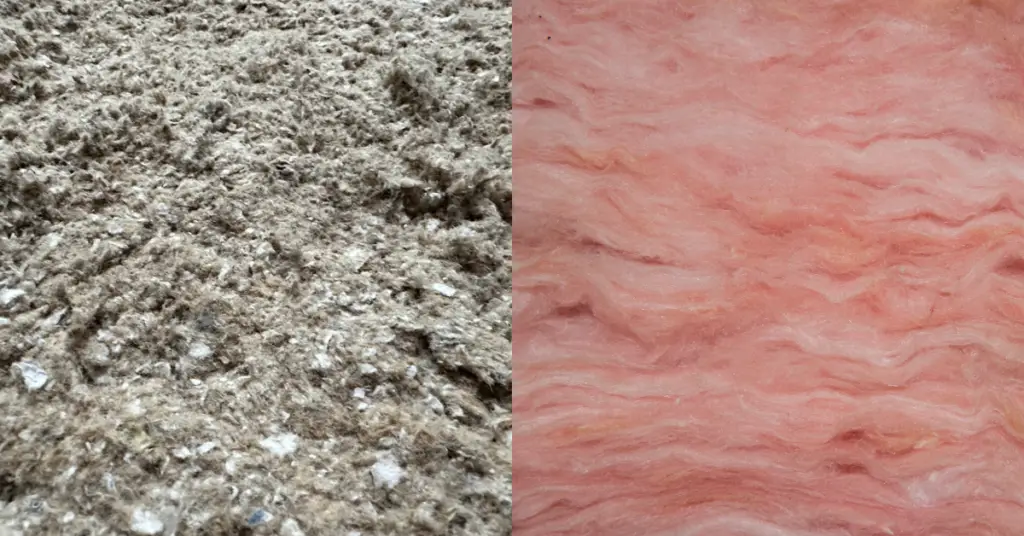
When paired with attic air sealing and proper ventilation, these systems outperform spray foam in cost, longevity, and ease of maintenance.
Ventilation partnership rounds out the alternatives’ case: fiberglass and cellulose on the attic floor leave the soffit-to-ridge airflow doing its designed work above them — cooling the deck, drying incidental moisture, extending roof life — with baffles guarding the eave path on every proper install. The attic fan service extends that airflow where trapped-heat homes need help, and the whole system works with the roof instead of redefining it.
Notice the property all three alternatives share, because it’s the article’s quiet thesis: each is factory-manufactured, inert on arrival, installable to any target, inspectable for life, and removable the day circumstances change. They compete with each other on price, R-per-inch, and fit — healthy competition the comparison guides referee — but they agree completely on the trait foam lacks. The alternatives aren’t merely cheaper; they’re architecturally humbler, and humble materials age better in real houses.
The deeper choices inside these recommendations each have their own guide: the cellulose vs. fiberglass comparison settles the material question, the batts vs. blown-in comparison settles the method, and the installation service page covers the process to R-44 and beyond — federal guidance at energy.gov and ENERGY STAR’s R-value tables back the whole framework.
11.Bonus: Common Myths About Spray Foam — Debunked
| Myth | Truth |
|---|---|
| Spray foam always saves money | In mild climates, the savings are minimal |
| It improves air quality | It can trap VOCs, moisture, and odors |
| It’s the most eco-friendly | Foam uses petroleum-based chemicals and can’t be recycled |
| It lasts forever | Yes, but that’s a problem when it fails |
Work the money myth one level deeper, since it’s the one the sales process leans on hardest: foam’s premium must be recovered through energy savings that exceed what proper sealing-plus-depth already delivers — not versus an empty attic, versus the correct conventional job. In a mild climate, that marginal difference is small, the premium is large, and the payback math stretches past most ownership horizons before the first complication ever bills you.
The last row is the article in four words. Longevity is only a virtue in things that work; in things that fail, it’s a sentence. Every other myth on the table dissolves under the same question the whole decision should be run through: what happens when something goes wrong? The materials we recommend all have good answers. Foam’s answer is a reciprocating saw.

12.Final Thoughts: Choose What’s Right for Your Home
At Attic Shield, we believe that every insulation decision should be based on:
- Your local climate
- Your home’s structure
- Your long-term plans
- Your budget and health concerns
Spray foam may be trendy, but for most California homes, it’s simply not the right choice. It’s expensive, permanent, and overcomplicated — and can lead to serious maintenance and health concerns.
Instead, opt for trusted materials like blown-in fiberglass or cellulose insulation. Pair them with air sealing, sanitization, and proper ventilation — and you’ll see long-term performance without the headaches.
And the decision factors list above is not rhetorical — it’s literally how the free inspection is structured: your climate zone read from your address, your structure read by flashlight and camera, your long-term plans asked out loud, and your budget honored with a three-column scope that never includes products your attic didn’t request. Insulation advice that starts from the house instead of the product ends up here far more often than at a foam rig.
What should a homeowner do with this article at bid time? Three moves: ask any foam proposal to name, in writing, what happens at the next reroof, the next duct replacement, and a future sale; ask what the removal path costs if a moisture or odor problem emerges; and ask why the same performance target can’t be met with sealing, ventilation, and depth. Proposals that survive those three questions are rare in this climate — which is the point of asking them.
One scope clarification this article owes its readers, because the word ‘foam’ does double duty in this industry: localized sealant foam closing a wire penetration during air sealing is a targeted material used in small, appropriate applications — a completely different thing from coating roof decks with foam as the insulation system. And in rodent exclusion, foam never works alone at all: 1/8-inch steel mesh is the backbone of every sealed entry, with sealants serving alongside the steel, never foam alone. Same word, three very different jobs — and only one of them is the subject of this article’s verdict.

13.Ready to Upgrade Your Insulation the Smart Way?
Contact Attic Shield today for a free attic inspection and estimate. We’ll walk you through your options, show you before-and-after photos, and help you choose insulation that keeps your home comfortable, safe, and energy efficient — without the risks of spray foam.
Call us at (858) 402-0066 — a free inspection, one to two hours, a camera, and a written three-column scope.
Book in sixty seconds at the request page. The family behind the company answers Monday through Friday 7 to 5 and Sunday 9 to 2 — a licensed C-2 insulation contractor, verifiable live at the CSLB (#1138021) — serving all 70+ communities across San Diego County, Southwest Riverside County, and South Orange County, with the live review feed showing how the last several hundred foam-free attics turned out.

14.Spray Foam Insulation — FAQs
Is spray foam insulation ever a good choice?
Honesty requires the concession: in genuinely cold climates, unusual assemblies, and certain commercial applications, spray foam’s specific properties can justify its costs and constraints, and competent designers specify it there for real reasons. In Southern California’s mild residential climate, the honest engineering answer is that properly installed blown-in or batt insulation with air sealing and balanced ventilation delivers the performance without the permanence, the access problems, or the risk profile.
Can spray foam insulation be removed?
Yes, but not easily — removal means physically cutting and scraping hardened foam off rafters, decking, and framing, slow labor-intensive work that costs a multiple of what any conventional insulation removal costs and still leaves residue bonded to the wood. That asymmetry is the core of the argument: every other insulation decision is reversible; this one bills you to change your mind.
Does spray foam really trap odors and moisture?
It can, and this is field experience from hundreds of homes rather than theory: foam applied over prior rodent activity, damp wood, or an unresolved roof leak seals the existing problem permanently into the assembly, and homeowners inherit musty or chemical smells with no access to the source. The fix at that point is demolition-grade removal — the very thing the material resists.
What is off-gassing and should I worry about it?
Spray foam is site-manufactured chemistry — two-part isocyanate compounds mixed and cured right there in your attic — and when the ratios, temperature, or humidity drift off specification during application, the curing reaction can go wrong and chemical emissions can linger in the living space below. Properly applied foam is designed to become inert; the concern is that ‘properly’ is harder to achieve than the sales pitch admits, and the failure mode lives in your air supply.
Will spray foam affect my home’s resale?
It genuinely can. Experienced buyers and their inspectors know foam blocks visual inspection of the roof structure, wiring, and framing above the ceiling — and a meaningful share of them treat it as a flag rather than a feature. We’ve been hired to remove spray foam ahead of listings precisely because the sellers’ agents expected it to cost more in negotiation than the removal cost in labor.
What should I install instead of spray foam?
For most California homes the recipe is settled: targeted air sealing first, then blown-in fiberglass or cellulose to your climate zone’s required R-value — our typical spec runs to R-44 — with attic ventilation preserved, baffled at the eaves, and balanced intake to exhaust. Batts serve walls and specific assemblies. The combination outperforms foam on cost, serviceability, and reversibility in this climate.
Is the foam used in air sealing the same thing?
No — and the distinction matters enormously for reading this article correctly. Localized sealant foam closing a wire hole or plumbing gap is a targeted air-sealing material, used in small, code-appropriate applications where the opening calls for it. Spray foam insulation means coating entire roof decks or cavities with the material as the thermal system. Attic Shield uses compatible sealants where openings call for them and does not install spray foam as an insulation system.
My home already has spray foam — what now?
Start with an inspection rather than alarm: foam that was applied well over a sound, dry structure may be performing fine for now, and the assessment documents its current condition, checks the accessible surfaces for the moisture and odor failure modes described above, and maps your realistic options going forward. If removal is justified — for repairs, sale prep, or an active problem — the scope and sequence get planned honestly, in writing, with photographs.
Ready for a free photo-documented inspection?
One to two hours, a camera, and a written scope — no pressure, no obligation, across all 70+ communities we service in San Diego County, Southwest Riverside County, and South Orange County.
or call (858) 402-0066 · Mon–Fri 7–5 · Sun 9–2