 AtticShield


A complete guide for San Diego homeowners from Attic Shield. Have you ever walked into your living room and thought, “Why is it always hotter in here than the rest of the house?” Or maybe your bedroom feels freezing in the morning, even though the thermostat is set perfectly?
You’re not alone. Uneven temperatures and comfort issues are common complaints for San Diego homeowners, especially in homes with older insulation, leaky attics, or poorly sealed air ducts. But temperature problems aren’t just about comfort — they can also lead to higher energy bills, poor air quality, and even health concerns.
In this guide, we’ll cover what the ideal home temperature is, the signs your home is too hot or cold, what causes temperature issues, the impact on your health, energy use, and HVAC system — and most importantly, what to do about it so your home finally holds the right temperature in every room.

1.What’s the Ideal Temperature Inside a Home?
According to the U.S. Department of Energy, the ideal indoor temperature is:
- 68°F to 72°F in winter (when you’re home and awake)
- 72°F to 78°F in summer (when you’re home and active)
At night or when you’re away, slightly lower or higher settings are recommended to conserve energy. But those are just numbers. Comfort depends on several factors:
- Humidity levels
- How well your home is insulated
- Air leakage
- Ductwork design
- Personal preference
The thermostat sets a target. The envelope decides whether your home can hold it.
Humidity, the list’s first factor, moves the feeling of the right temperature more than most San Diego homeowners expect: marine-layer mornings can make 70°F feel clammy while dry inland afternoons make 78°F feel pleasant, and an attic with moisture problems — blocked ventilation, a bathroom fan dumping into it, rodent activity — pushes humidity into the living space below. Getting the right temperature is partly a moisture project wearing a thermostat costume.
That distinction is the whole article in one sentence: a house with a failing attic can be set to the right temperature all day without ever being the right temperature anywhere but the hallway. When homeowners tell us the thermostat ‘lies,’ it’s usually telling the truth about one square foot of wall — and the rest of the house is answering for the envelope.
2.Signs It’s Too Hot Even With the A/C Running
- Some rooms are noticeably hotter than others
- Your HVAC system seems to run constantly
- Attic feels like a furnace
- Ceiling feels hot to the touch
- You’re constantly adjusting the thermostat
The constantly-running HVAC sign has a sound homeowners learn to tune out and shouldn’t: a system that used to cycle — run, rest, run — and now drones continuously is reporting that the envelope leaks faster than it can fill. The equipment isn’t weaker; the bucket has more holes. Listen for the rests; their absence is the earliest audible symptom that the right temperature is being manufactured and lost simultaneously.
The hot-ceiling sign deserves star billing because anyone can run the test tonight: on a warm afternoon, press a palm flat against an upstairs ceiling. A ceiling that feels warm is radiating attic heat straight into the room — the roof deck above may be running 140–160°F, and the only negotiator between that furnace and your family is the insulation layer. A warm palm means the negotiator is losing.

3.Signs It’s Too Cold Despite Heating
- Rooms never get warm, even after hours of heating
- Cold floors or drafty walls
- Bedrooms or bathrooms far from the furnace feel like refrigerators
- Furnace short cycles or struggles to maintain temperature
Short cycling — the furnace firing, quitting, and refiring in quick bursts — is the winter list’s sneakiest entry because it masquerades as an equipment problem and often isn’t: a heater serving a leaky, under-insulated envelope hits its limit switch, rests, and restarts endlessly. Many a service call for a ‘bad furnace’ ends with a technician pointing up at the attic. Diagnose the envelope before replacing the equipment; it’s the cheaper suspect and the more common culprit.
Cold floors carry their own address: the crawl space. When the under-floor plane is uninsulated or its insulation has fallen or been dragged down by pests, winter mornings arrive through your feet no matter what the furnace does — a problem the crawl space insulation service exists to end. And the far-room refrigerator effect is usually a delivery failure, not a heating failure: the warmth is being made, then lost in transit through attic ductwork.

4.Signs of Uneven Temperatures
- Upstairs rooms hotter than downstairs
- One side of the house feels fine, the other doesn’t
- Thermostat says 72°F, but you don’t feel it
- Frequent fights over thermostat settings
Room-to-room differences aren’t random — they’re a map of specific defects overhead.
The two-story version of uneven temperatures deserves its own line, because it’s our region’s most common complaint in one sentence: downstairs comfortable, upstairs unlivable by 4 PM. The physics is stacked against the top floor — it sits directly beneath the attic’s heat and receives the house’s rising warmth — so the top floor is always the first casualty of a failing attic plane and the first beneficiary of a fixed one. If your family migrates downstairs every summer evening, your house has already diagnosed itself.
Read your own house like a diagnostician for a moment: upstairs-hotter-than-downstairs points at the attic plane; one-side-fine-one-side-not often traces to duct runs that leak before reaching the far wing or insulation displaced over specific rooms; and the thermostat-says-72 complaint is radiant physics — your skin feels the warm ceiling and cold drafts the sensor never touches. The thermostat fights are just the human layer of the same map.
5.Cause 1: Poor or Old Insulation
If your insulation is:
- Thin or compressed
- Outdated (pre-1990s standards)
- Rodent-contaminated or moldy
- Missing altogether in some spots
…it simply can’t block heat transfer. In San Diego, attic insulation should be R-30 to R-38 (about 10–14 inches deep) — and our own installs typically spec to R-44, above the baseline, because the crew is already there and the code only rises.
How do you know which of the four conditions your insulation has? The flashlight tells most of the story: joists visible above the material mean it’s thin; footprints and matted channels mean compression or rodent traffic; discoloration around can lights and at eaves means air has been filtering through it for years, using it as a dust filter instead of a blanket. Ten minutes at the hatch with a ruler beats an hour of thermostat fiddling.
Fix: replace damaged insulation with high-performance, eco-friendly insulation. A professional team like Attic Shield will install to code — and beyond. Federal guidance at the Department of Energy’s insulation guide runs the same direction, and the climate zone map guide shows exactly which R-value your address answers to. The pre-1990s line matters more than it reads: a home insulated to its original decade’s standard can be carrying half or less of today’s target, faithfully underperforming for thirty years.


6.Cause 2: Unsealed Air Leaks
Warm air escapes through:
- Attic hatches
- Electrical/plumbing penetrations
- Duct gaps
- Recessed lights
- Wall framing
The recessed-light entry on that list earns special mention in any home built before LED retrofits: older can lights are effectively chimneys through the ceiling plane, each one venting your conditioned air upward around the fixture — and a ceiling can hold a dozen of them. Modern sealed retrofits close the chimney while cutting the fixture’s own heat; it’s one of the highest-ratio small fixes in the whole temperature project.
You’re heating and cooling your attic instead of your home — wasting energy and creating temperature swings.
Fix: air sealing with caulk, foam, and weatherstripping reduces leakage and stabilizes temps. The air sealing service handles the full penetration list — and sequencing matters here more than anywhere: every one of those gaps is reachable in the hour before new insulation lands and buried the hour after, which is why sealing rides first on every properly ordered scope.


7.Cause 3: Inadequate Ventilation
A hot attic = a hot house.
If your attic doesn’t have proper intake (soffit vents) and exhaust (ridge or gable vents), heat and humidity get trapped, affecting indoor temps and even roofing lifespan.
The right temperature in the rooms below starts with the temperature above them, and ventilation is the half of that equation people forget: a well-vented attic sheds its heat load into the evening air instead of storing it in the framing to radiate down all night. That stored-heat effect explains a classic complaint — the house that can’t find the right temperature until midnight, long after the outside air has cooled. The attic is running a heat bank, and ventilation is how you close the account.
Fix: balance your attic ventilation. In some cases, an attic fan or solar vent can also help — the attic fan service covers both electric and solar options, and the California attic ventilation guide explains the intake-exhaust balance in full. Ventilation and insulation are teammates, not rivals: the vents drain the attic’s heat load while the insulation blocks what remains, and a scope that buries the soffit path under new material has hired one teammate to sabotage the other.
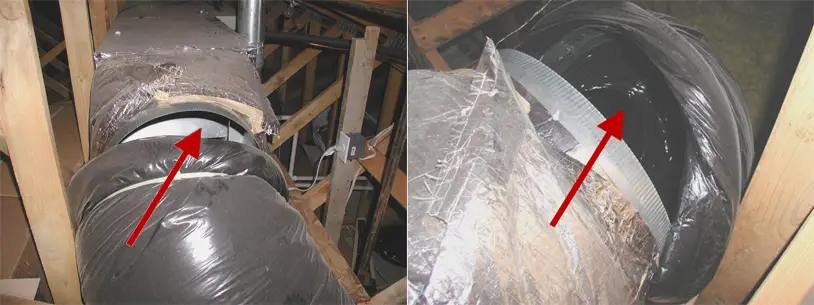
8.Cause 4: Ductwork Problems
If your ducts are:
- Leaky
- Crushed
- Uninsulated
- Disconnected
…your HVAC is sending conditioned air into your attic. Meanwhile, the furthest rooms get little airflow.
Fix: have your ducts inspected, sealed, and reinsulated. Attic Shield offers duct lifting and repairs for maximum efficiency — the duct repair & replacement and duct insulation pages cover the full toolkit. Uninsulated ducts commit a subtler version of the same theft, too: air cooled at the unit crosses a 130°F attic in bare sheet metal and arrives at the far register noticeably warmed — the system did its job and the delivery route undid it, which is what R-8 wrap on every unconditioned run exists to prevent. And the disconnected case deserves its own horror note: a supply line that has simply fallen off its boot conditions the attic at full blast, room registers starve, and the utility company bills for every cubic foot — found more often than any homeowner would believe, and fixed in an afternoon.
9.Cause 5: Rodent or Mold Contamination
Rodents don’t just chew wires — they flatten insulation, block airflow, and leave behind waste that affects air quality and temp control.
How does contamination change temperature? Mechanically: a rodent highway system tunneled through blown insulation replaces still, insulating air with moving channels, and nesting compressed into the material converts inches of R-value into a dense mat performing at a fraction of its depth. Add urine moisture degrading the material and vents blocked by debris, and an attic can lose a meaningful share of its rated performance while looking, from the hatch, merely untidy.
Fix: full rodent proofing, sanitization, and new insulation = cleaner air and better temperature control. The sequence is the doctrine: exclusion first through rodent proofing — 1/8-inch steel mesh at every entry point, never foam alone — then waste removal and sanitization, then fresh material. Skip the steel and the new insulation is a welcome mat; CDC guidance on rodent-borne health risks explains why the waste half is a health project, not just a comfort one. The rodents guide walks the whole arc.

10.Why Temperature Control Matters (More Than You Think)
Energy Bills
When your HVAC works harder to compensate for poor insulation or leaks, your energy bill skyrockets. A well-insulated and sealed home can cut energy use by up to 30% — and utility rebate programs reward the work; the ENERGY STAR Rebate Finder catalogs what’s live at your ZIP code.
Health & Air Quality
Temperature swings, mold, rodent waste, and excessive humidity can:
- Aggravate asthma and allergies
- Create uncomfortable sleeping environments
- Lower indoor air quality
- Trigger headaches, dry skin, or colds
HVAC Longevity
If your furnace or A/C is running constantly due to uneven temps, it’s wearing out faster. You’ll face more frequent repairs — or total system replacement. This is the multiplier homeowners under-count: the same envelope defects tax you three ways at once — monthly on the bill, nightly on sleep quality, and yearly on equipment life. Fixing the attic isn’t one repair; it’s three bills shrinking together.

11.The 5 Causes and Their Fixes at a Glance
| Cause | What It Does | The Fix |
|---|---|---|
| Poor or old insulation | Can’t block heat transfer | Replace to R-38+ (we spec R-44) |
| Unsealed air leaks | Conditions the attic, not the home | Seal every penetration first |
| Inadequate ventilation | Hot attic = hot house | Balance intake & exhaust; add fans |
| Ductwork problems | Far rooms starve; attic feasts | Inspect, seal, insulate, lift |
| Rodent/mold contamination | Flattened insulation, blocked airflow | Steel exclusion, sanitize, re-insulate |
One table, one honest observation across it: every row lives in or above your ceiling, and the right temperature arrives only when all five rows read green — perfect insulation still loses to leaking ducts, and flawless ducts still lose to a bare attic. The right temperature is a team result. Temperature complaints get chased around thermostats, equipment, and windows, but the five culprits share an address — which is why one attic inspection diagnoses all five at once.
12.What You Can Do: Solutions for San Diego Homes
1. Get a Professional Attic Inspection (Free!)
The first step is identifying the problem areas. At Attic Shield, we offer free inspections where we evaluate current insulation levels and condition, air leaks, duct layout and airflow, signs of rodent contamination, and moisture or mold presence. You’ll get a full report and photo documentation — the inspection guide shows exactly what the visit covers, one to two hours with a camera and a written three-column scope.
2. Upgrade or Replace Attic Insulation
We install blown-in fiberglass or cellulose insulation up to R-38 for San Diego climate zones — and beyond it where the project calls, with R-44 our typical spec. This helps maintain the right temperature year-round, reduced A/C and furnace workload, and lower utility costs. The cellulose vs. fiberglass guide settles the material question; the installation service page covers the process end to end.
3. Air Sealing and Duct Repair
Before adding new insulation, we seal all attic gaps and penetrations with foam, caulk, and patching materials. We also lift ducts above insulation, seal and insulate ducts, and ensure proper airflow across all rooms — the delivery system and the envelope, fixed in the same mobilization.
4. Sanitize and Rodent Proof If Needed
If rodents have been present, we’ll remove all waste, disinfect, and seal entry points to prevent re-entry — steel at every opening, per the doctrine above. This improves temperature control and protects your attic investment.
5. Install Ventilation or Attic Fans
In homes where heat gets trapped, we recommend adding ridge or gable vents, installing solar or electric attic fans, and improving soffit ventilation. This keeps the attic cooler and the whole home closer to the right temperature with less mechanical effort.


13.What’s a Comfortable Home Worth to You?
If your home feels too hot, too cold, or just “off” — you don’t have to live with it. Most temperature issues can be solved affordably with the right combination of:
- Insulation
- Air sealing
- Duct repair
- Ventilation
- Rodent proofing and sanitation
Every path back to the right temperature starts the same way: measure before spending. And it all starts with a free inspection from Attic Shield. We proudly serve San Diego, Chula Vista, Escondido, El Cajon, Oceanside, Carlsbad, Temecula, Murrieta, Lake Elsinore — and everywhere in between, across all 70+ communities in San Diego County, Southwest Riverside County, and South Orange County.
Book your free attic inspection today. Call (858) 402-0066 — take control of your home’s comfort, air quality, and energy efficiency.

14.Final Thought
The right temperature isn’t a luxury spec — it’s the baseline a healthy, efficient house owes its owners, in July and January alike. Your home should be your comfort zone — not a place you dread because it’s too hot or cold. If something feels “off,” it probably is.
Let Attic Shield help you fix it — for good.
Book in sixty seconds at the request page. The family behind the company answers Monday through Friday 7 to 5 and Sunday 9 to 2 — licensed C-2, verifiable live at the CSLB (#1138021) — and the live review feed shows how the last several hundred too-hot, too-cold houses ended up: at the right temperature, room by room.

15.The Right Temperature — FAQs
What is the right temperature for a home?
The U.S. Department of Energy’s guidance: 68–72°F in winter while home and awake, 72–78°F in summer while home and active, with energy-saving setbacks at night and away. But the right temperature is only half thermostat — humidity, insulation, air leakage, and duct design decide whether the number on the wall matches the feeling in the room.
Why is one room always hotter than the rest of the house?
Usually because the plane above it is failing differently than elsewhere — thin or displaced insulation over that room, a duct run that leaks before arriving, or blocked airflow. Room-by-room differences are diagnostic gold: they point at specific defects the inspection can photograph rather than a whole-house mystery.
Why does my thermostat say 72 but it doesn’t feel like it?
The thermostat measures one hallway; you live in the whole envelope. Radiant heat from an under-insulated ceiling, drafts from unsealed penetrations, and humidity swings all change how 72°F feels — which is why the fix for ‘it never feels right’ lives in the attic more often than in the HVAC settings.
Can bad insulation really change my home’s temperature that much?
Yes — the attic accounts for the largest share of a home’s heat gain and loss, and thin, compressed, or rodent-flattened insulation lets the roof’s heat radiate straight down in summer and your furnace’s heat escape straight up in winter. It’s the difference between a lid and a sieve.
Do leaky ducts cause hot and cold rooms?
Directly: conditioned air escaping into the attic never reaches the far rooms, so the nearest registers roar while the distant bedrooms starve. Sealing, insulating, and — where needed — repairing or rerouting ducts routinely fixes the ‘refrigerator bathroom’ and the ‘furnace bedroom’ in the same visit.
Will fixing my attic really lower my energy bill?
A well-insulated and sealed home can cut energy use by up to 30% — because the HVAC stops re-conditioning air the envelope keeps losing. The comfort change arrives in days; the bill confirms it within the first full cycle.
Does rodent activity affect home temperature?
More than most homeowners guess: rodents flatten insulation into useless mats, tunnel airflow channels through it, and block vents with nesting. Temperature control returns only after the sequence runs in order — exclusion with steel, waste removal, sanitization, then fresh insulation.
What’s the first step if my home never feels the right temperature?
A professional attic inspection — free, one to two hours, camera in hand — that evaluates insulation depth and condition, air leaks, duct layout, rodent evidence, and moisture. Temperature complaints are symptoms; the inspection finds the disease and prices only what your attic actually needs.
Ready for a free photo-documented inspection?
One to two hours, a camera, and a written scope — no pressure, no obligation, across all 70+ communities we service in San Diego County, Southwest Riverside County, and South Orange County.
or call (858) 402-0066 · Mon–Fri 7–5 · Sun 9–2