Quick Answer (Most Homes)
If your attic has a history of drafts, uneven temperatures, or high energy bills:
your best “material choice” usually starts with attic air sealing
and only then choosing the insulation type.
In many Southern California homes, blown-in fiberglass is the most common “best value” choice when installed to the right depth,
paired with proper air sealing and rodent exclusion. Cellulose can be a strong option too—especially for sound control and dense coverage—
but it’s not automatically “better,” and moisture/contamination history matters.
Here’s the honest truth: homeowners usually want a simple winner—“cellulose or fiberglass?”—
but the best outcome comes from a system approach:
stop air leaks, block rodent entry points, remove contaminated insulation if needed, sanitize when appropriate,
and then install the correct insulation depth for your climate and comfort goals.
The Big Picture: Insulation vs. Air Leaks
Insulation slows heat transfer. Air leaks move heat (and dust) fast.
That means a home can have “decent insulation” and still feel uncomfortable if the attic is leaky.
You’ll see this in real life as:
- Hot upstairs bedrooms even when the thermostat says everything is fine
- Cold drafts around ceiling lights, vents, attic hatches, or wall tops
- Dusty indoor air because attic air is being pulled into living space
- HVAC struggles because conditioned air is escaping into the attic
That’s why Attic Shield often pairs insulation projects with:
air sealing,
rodent proofing,
and when needed insulation removal
+ sanitization.

Air sealing is often the “missing step” that makes insulation finally feel like it works.
If you want to verify recommended insulation levels by region, here are two reliable references:
U.S. Department of Energy – Insulation guide and
ENERGY STAR – Recommended Home Insulation R-Values.
(These are general guidance sources; your home’s best plan still depends on attic layout, duct location, and air leakage.)
What Is Cellulose Insulation?
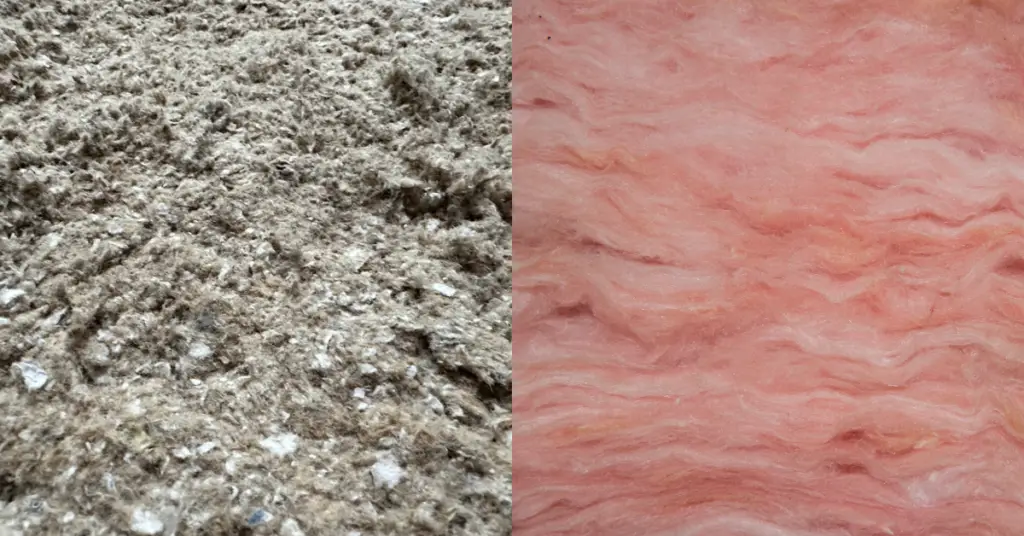
Cellulose insulation is typically made from recycled paper fibers treated with fire-retardant additives.
In most attic applications, cellulose is installed as loose-fill (blown-in) insulation.
The material is dense and tends to “pack” together more than loose fiberglass, which can help with coverage in irregular areas.
Where cellulose shines
- Coverage & density: can fill small voids and corners well when installed correctly
- Sound control: many homeowners notice quieter rooms, especially near busy streets
- Eco angle: often marketed as a recycled-content choice
Where cellulose requires more caution
- Moisture history: if your attic has roof leaks, bathroom fan venting issues, or coastal moisture problems, the plan must address those first
- Contamination risk: if rodents were present, any insulation type can become a problem—but denser material can hold contamination until it’s removed
- Weight/load considerations: typically not an issue for normal attic floors, but still a factor on older homes with questionable framing or unusual attic conditions
What Is Fiberglass Insulation?
Fiberglass insulation is made from spun glass fibers and is extremely common in residential homes.
In attics, fiberglass is typically installed as either:
blown-in (loose-fill fiberglass) or batts (fiberglass blankets).
In Southern California attics, blown-in fiberglass is often used to reach modern R-values efficiently—especially when the attic floor is open and accessible.
Where fiberglass shines
- Reliable performance: widely used, predictable results when installed to correct depth
- Moisture resilience: fiberglass itself doesn’t absorb water the same way paper fibers can, but wet insulation of any type still underperforms and must be addressed
- Serviceability: easier to move temporarily around electrical junctions, recessed lighting zones, or future work areas (with proper safety)
Where fiberglass can fail
- Wind washing & displacement: if attic ventilation or open soffit paths blow air through insulation, performance drops unless baffles and air sealing are done properly
- Low-quality installs: thin coverage, uneven depth, or insulation installed over open bypasses can leave “hot spots” and “cold spots”
- Rodent tunneling: loose-fill fiberglass is easy for rodents to tunnel through if entry points aren’t sealed
Cellulose vs. Fiberglass Comparison Table (2026)
| Category |
Cellulose (Loose-Fill) |
Fiberglass (Loose-Fill / Batts) |
| Best use case |
Homes wanting dense coverage + sound control, with moisture risks addressed first |
Most SoCal attics needing a clean, cost-effective R-value upgrade |
| Comfort impact |
Strong, especially if air leaks are sealed and depth is correct |
Strong, especially with air sealing + correct depth and even coverage |
| Moisture sensitivity |
Needs careful planning if attic has leaks or humidity issues |
More forgiving, but wet insulation of any type is still a problem |
| Rodent reality |
Rodents can still tunnel/nest; exclusion matters more than material |
Rodents can still tunnel/nest; exclusion matters more than material |
| Dust / air quality |
Great when paired with air sealing; otherwise attic dust can still enter home |
Great when paired with air sealing; otherwise attic dust can still enter home |
| Typical 2026 value |
Good-to-excellent depending on attic conditions + installer skill |
Excellent for most homes when installed professionally with air sealing |
Most homeowners judge insulation by one question: “Will my house feel better?”
In 2026, both cellulose and fiberglass can deliver a major comfort upgrade when installed correctly.
The practical differences come down to:
- Depth and consistency: insulation performance depends on continuous, even coverage—no thin spots
- Air sealing: open penetrations can undermine any insulation material
- Duct location: ducts in the attic benefit hugely from better insulation + sealing
- Sound goals: cellulose is often chosen when noise reduction is a priority
“But what about R-value per inch?”
Homeowners often get stuck comparing R-value-per-inch numbers. That can be useful for tight cavities, but for open attics,
the more important metric is installed R-value at the attic floor—meaning: how deep is it, how even is it,
and did the installer fix the airflow issues that ruin performance?
If you want a simple homeowner-friendly way to think about it: most common loose-fill insulation types are “in the same general neighborhood”
per inch, so the bigger difference is usually installation quality and attic leakage, not the label on the bag.
ENERGY STAR has a helpful overview of attic insulation and how homeowners can estimate insulation levels.
ENERGY STAR – Well-Insulated and Sealed Attic
Sound control: where cellulose can feel “different”
If you live near a busy road, have a home office under the attic, or simply want a quieter home,
cellulose’s density can help reduce airborne sound transmission.
Fiberglass can also help with sound, but homeowners who prioritize noise reduction often lean cellulose—
especially when the rest of the attic system (sealing + depth) is done correctly.
Moisture & Mold Risk (Coastal vs. Inland)
In Southern California, moisture risk depends heavily on where you live:
coastal marine layers and humidity patterns differ from inland heat zones.
But moisture issues aren’t only “weather”—they’re usually caused by specific attic conditions such as:
- Roof leaks (even small ones) that slowly dampen insulation
- Bathroom fans venting into the attic instead of outdoors
- Kitchen venting issues or disconnected duct runs
- Poor ventilation balance or blocked vents
- Condensation points from temperature swings + air leakage
How cellulose and fiberglass behave with moisture
Moisture is a performance killer for any insulation type. The difference is how problems show up.
Cellulose (paper fiber) can hold moisture and clump or compact if it’s exposed to damp conditions.
Fiberglass doesn’t “soak up” water the same way, but wet fiberglass still loses performance and can lead to other issues
(like damp dust, odor, or ceiling staining).
If your attic has any signs of dampness, the best move is to identify the source during a full inspection.
If insulation is contaminated or compromised, proper
insulation removal may be required before installing new material.
Pro tip: If your home has “mystery odors,” allergy flare-ups, or musty air that seems to come and go,
your attic may need more than just insulation. Attic Shield can combine
sanitization and
air sealing
so your insulation upgrade supports cleaner indoor air—not just a higher R-value.
Rodents: Nesting, Contamination, and What Matters Most
Homeowners often ask: “Which insulation stops rodents—cellulose or fiberglass?”
The honest answer: neither one stops rodents.
If rodents can enter the attic, they can tunnel, nest, contaminate, and damage insulation of any type.
The winning strategy is exclusion + sealing:
locate entry points and close them using rodent-resistant materials.
That’s why many Attic Shield insulation projects include
rodent proofing
and—if contamination is present—
attic cleaning /
sanitization.

Insulation works best when rodents are excluded and the attic is sealed properly—material choice comes after the fundamentals.
Safe cleanup matters
If you suspect rodent droppings or nesting materials, avoid sweeping or vacuuming contaminated areas without proper precautions.
Public health guidance for cleanup is available from the CDC:
CDC – How to Clean Up After Rodents.
If you’re dealing with ongoing rodent exposure concerns, the CDC also provides prevention guidance:
CDC – Hantavirus Prevention.
Installation Quality: The #1 Thing Homeowners Miss
In 2026, the “best insulation” is the one that’s installed correctly.
We’ve inspected attics with premium materials that underperform because the install skipped the basics.
Here’s what professional installation should include:
1) A real attic inspection (not guesses)
You can’t design the right insulation plan without understanding:
attic access, existing insulation type/condition, air bypasses, duct condition, ventilation balance,
moisture signs, and evidence of pests.
Attic Shield inspections are documented with photos so you can see exactly what’s driving the recommendation.
2) Air sealing BEFORE insulation (when appropriate)
Air sealing closes the hidden gaps that make insulation feel ineffective.
Learn more about Attic Shield’s process:
Attic Air Sealing.
3) Removing contaminated or failing insulation (when needed)
New insulation installed over old, contaminated, or moisture-damaged material is a common “short-term fix” that becomes a long-term regret.
If insulation is compromised, start with:
Attic Insulation Removal.
4) Even depth, correct coverage, and clean access points
Loose-fill insulation must be installed evenly—no thin areas, no bare corners, no “mountains and valleys.”
Just as important: attic hatches and access points must be treated correctly so insulation doesn’t become a mess or a thermal weak spot.
(Attic Shield secures fiberglass batts around the attic hatch to help prevent loose-fill insulation from falling.)
5) Duct issues can sabotage the whole project
If your ducts run through the attic, leaks and disconnected sections can waste huge amounts of conditioned air.
That’s why many homeowners bundle insulation upgrades with:
Duct Repair & Replacement.
Cost & Value in 2026: What You’re Really Paying For
Homeowners often compare quotes by “price per square foot” and assume the cheaper bid is a better deal.
In reality, the best value is the scope that fixes the reasons your attic fails in the first place.
In 2026, insulation value is usually determined by:
- Preparation work: protection, containment, cleanup, and safe handling
- Air sealing scope: how many bypasses are sealed and how thoroughly
- Rodent proofing scope: whether entry points are actually sealed (not just trapped)
- Insulation depth + coverage: the installed result, not the advertised R-value
- Documentation: before/after photos so you can verify what you paid for
If you want the cleanest path to a long-term result, start with a site inspection and a written scope.
Request a free estimate here:
https://atticshield.com/request/
SoCal Reality: San Diego Microclimates + Title 24 Basics
Southern California isn’t one climate. Coastal homes deal with marine layer and humidity swings.
Inland homes can see attic temperatures spike dramatically during heat waves.
That’s why insulation plans that work in one zip code can underperform in another.
California energy compliance and insulation quality guidance is available through the California Energy Commission.
For homeowners who want deeper reading, here’s an official CEC document on insulation and quality installation requirements:
CEC – Insulation and QII Requirements (PDF).
Attic Shield also published a California-focused breakdown that homeowners find helpful:
California Insulation Climate Zone Map & Requirements.
Which One Does Attic Shield Recommend?
We recommend the option that matches your attic’s reality—not the trend of the month.
In many homes, the best-performing plan is:
rodent exclusion + air sealing + correct-depth blown-in insulation.
For most SoCal attics, that often means blown-in fiberglass because it offers strong value and reliable results when installed professionally.
That said, cellulose can be a great choice when your attic conditions support it and your priorities include sound reduction or dense coverage—
especially if moisture risk is addressed and the install is done with care.
A simple decision guide
Choose fiberglass (often best value) if:
- You want a high-performing attic upgrade with a common, proven material
- You’re prioritizing energy savings and comfort per dollar
- You want a clean install that pairs well with air sealing and duct improvements
Choose cellulose (often best for sound + dense fill) if:
- You’re prioritizing noise reduction along with thermal comfort
- Your attic has been evaluated for moisture risk and ventilation issues
- You want dense coverage and your installer is experienced with proper cellulose depth and distribution
Either way, your best next step is a professional inspection so you’re not guessing.
Attic Shield provides photo documentation and a clear scope so you can compare options confidently.
FAQ: Cellulose vs. Fiberglass Insulation (2026)
Is cellulose insulation better than fiberglass in 2026?
Not automatically. Both can perform extremely well when installed to the right depth with proper attic air sealing.
Cellulose is often chosen for dense coverage and sound control. Fiberglass is often chosen for value and consistent performance.
The “better” option depends on moisture risk, air leakage, rodent history, and install quality.
Which insulation is best for San Diego homes—coastal vs. inland?
Coastal homes need special attention to moisture patterns and ventilation balance, while inland homes often prioritize heat control.
In both cases, air sealing is usually the biggest comfort multiplier. After sealing, the best insulation choice depends on your attic conditions and comfort goals.
Does either insulation type stop rodents?
No. If rodents can enter the attic, they can tunnel and nest in either material.
Long-term results come from sealing entry points with rodent-resistant materials and addressing contamination properly.
See: Rodent Proofing Services.
Do I need to remove old insulation before installing new?
If the existing insulation is clean, dry, and evenly distributed, sometimes you can add more.
But if it’s contaminated (rodents), damp, moldy, compressed, or uneven, removal is often the correct first step.
Learn more: Attic Insulation Removal.
Will insulation alone reduce my energy bills?
Insulation helps—but bills drop the most when insulation is paired with air sealing and (when relevant) duct repairs.
If your attic is leaky, conditioned air escapes and the HVAC runs longer. A system approach usually delivers the best ROI.
How do I get an exact recommendation for my house?
Schedule an inspection so the plan is based on facts—not guesses.
Request an estimate here: atticshield.com/request,
or call/text 858-402-0066.
Ready to Choose the Right Insulation in 2026?
Whether you choose cellulose or fiberglass, the winning formula is the same:
seal the attic, stop air leaks, block rodents, and install the right depth evenly.
Attic Shield does it the right way—with photos, clear scopes, and clean professional work.
Explore more resources:
Blogs •
FAQs •
Areas We Service