


Clean HVAC Attic Connection: What Homeowners Miss
Most homeowners think “clean HVAC” starts with a new filter and maybe a duct cleaning. But in real Southern California homes, your HVAC system can only stay as clean as the environment it pulls from and runs through. If your attic is dusty, contaminated, rodent-affected, or full of air leaks, your HVAC can pick up that story—through duct leaks, return pathways, pressure differences, and attic bypasses. This guide explains the attic-HVAC connection in plain English and shows what actually fixes it.
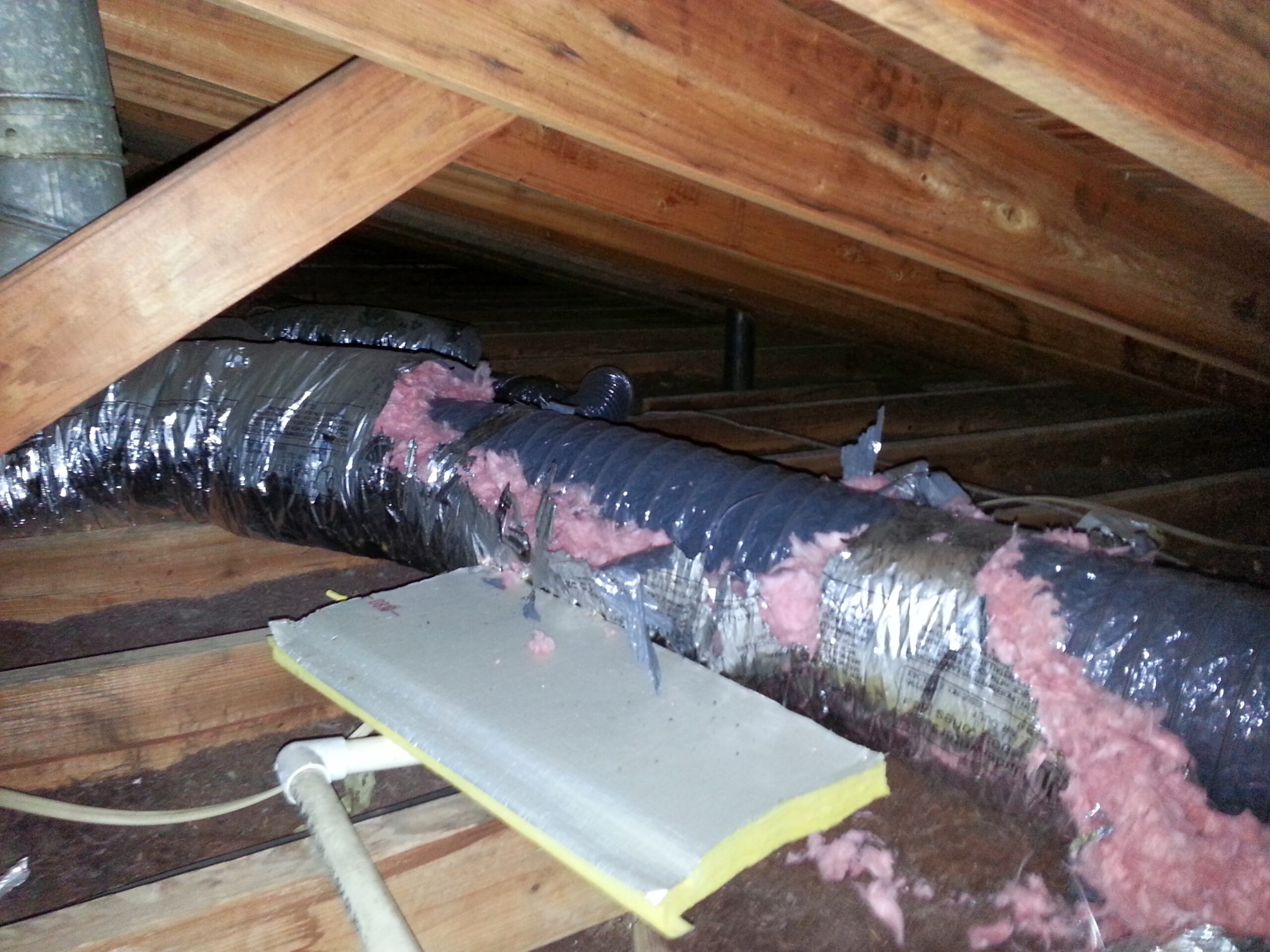
Table of Contents
- The Big Idea: Your HVAC “Breathes” the House
- How the Attic Affects HVAC Cleanliness
- Duct Leaks: The Hidden Dirty Air Pipeline
- Attic Bypasses: Tiny Openings, Big Impact
- Rodents, Odor, and Contamination: Why Filters Don’t Fix It
- What Actually Works: The Attic + HVAC Clean Plan
- Common Homeowner Scenarios (And the Best Fix)
- FAQ
The Big Idea: Your HVAC “Breathes” the House
Here’s the homeowner truth that changes everything: Your HVAC doesn’t only move “clean air.” It moves whatever air it can access. If your ducts are perfectly sealed and your home’s air boundaries are tight, HVAC air stays cleaner and more predictable. But if there are leaks in the duct system, gaps around the attic access, open wall-top plates, or poorly sealed penetrations, your HVAC can pull air from places you never intended—especially the attic.
That matters because attics commonly contain:
- Dust from old insulation and roof debris
- Fiberglass particles from disturbed or damaged insulation
- Rodent droppings, urine residue, and nesting debris (in many homes)
- Construction debris from past work
- Airborne odors that can travel through air pathways
If your HVAC system is connected to that environment—through duct leakage or attic bypasses—no filter in the world will make your system “clean.” Filters help, but they are not a substitute for fixing the source.
If you’ve ever said, “We change filters but the house still feels dusty or smells weird,” you’re exactly who this article is for.
How the Attic Affects HVAC Cleanliness
Think of your attic as a “mechanical neighborhood” for your HVAC system. Many homes run ducts through the attic. Many homes also have recessed lights, bathroom fan housings, plumbing penetrations, and wall-top gaps that connect the attic to living space. That means attic conditions can influence:
- Indoor dust levels (especially when HVAC is running)
- Odors (musty, rodent-related, “old insulation smell”)
- Allergy triggers (irritants traveling through air pathways)
- HVAC efficiency (duct leaks and heat gain/loss in attic)
- Filter loading (filters clog faster when the system pulls dirtier air)
Homeowners often focus on the thermostat and the vents in the rooms. But the HVAC system is really a loop: it pushes conditioned air out, and it pulls air back in through returns. If return pathways, duct connections, or chases communicate with the attic, the system can “sip” attic air every time it cycles.
That’s why the clean HVAC conversation must include the attic.
Duct Leaks: The Hidden Dirty Air Pipeline
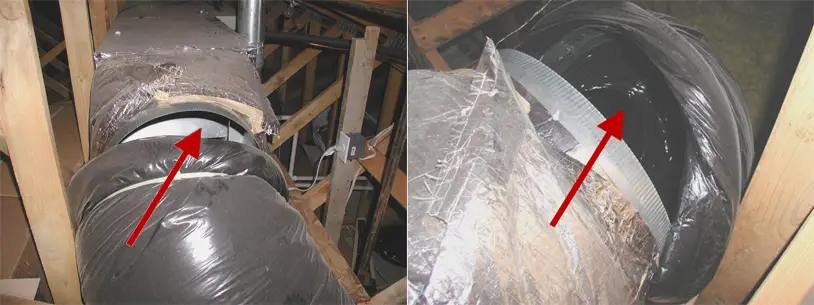
Duct leaks are one of the most common ways attic air contaminates HVAC performance. A duct leak isn’t always obvious. You may not hear it. You may not feel it. But it can still pull attic air into the system or dump conditioned air into the attic. Either way, you lose control.
How duct leaks make the HVAC “dirty”
When a duct connection is loose, torn, chewed, or poorly sealed, two things can happen depending on whether it’s on the supply side or the return side:
- Supply leaks (air going out to rooms): conditioned air leaks into the attic. Rooms get less airflow, the HVAC runs longer, and dust can be stirred up in the attic.
- Return leaks (air coming back to the system): the system can pull attic air into the return stream—bringing dust, insulation particles, and odors with it.
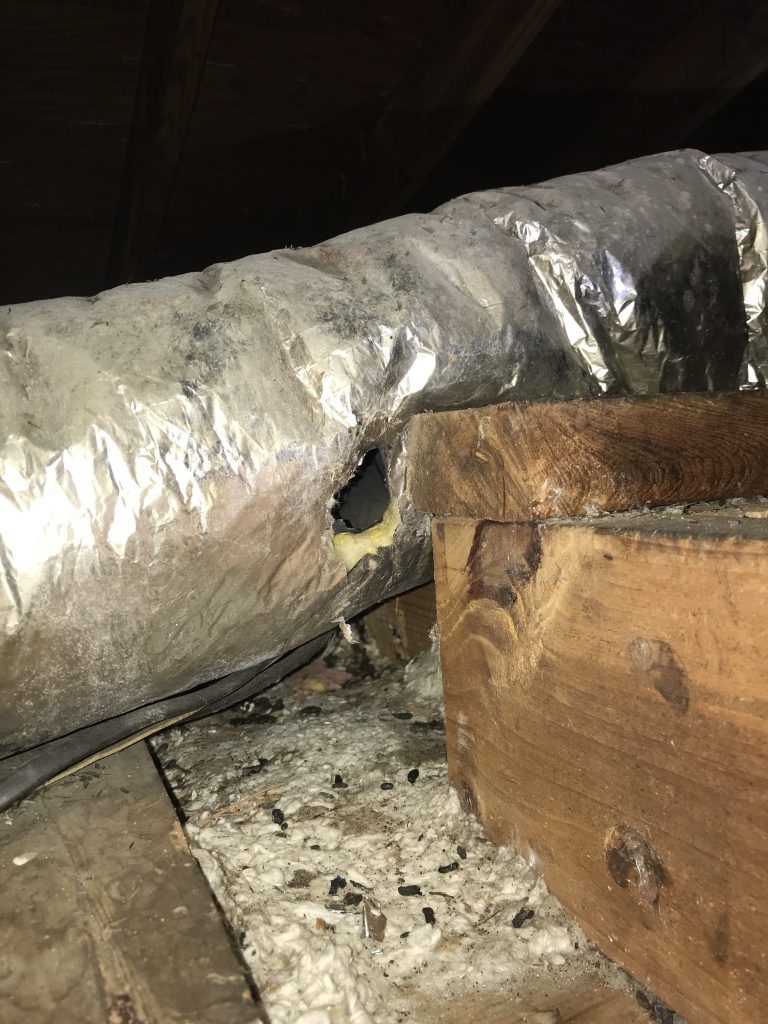
If rodents are present, ductwork is even more vulnerable. Rodents can chew flexible duct jackets, disconnect runs, and contaminate surfaces. That’s one reason “we cleaned the ducts” doesn’t always solve odor or dust—because the ducts can be getting re-contaminated by the attic environment.
If you suspect duct issues, start here: Duct Repair & Replacement.
Attic Bypasses: Tiny Openings, Big Impact
Even if your ducts are in decent condition, attic bypasses can still move attic air into the house. An attic bypass is any gap where air can move between the attic and the living space. Over time, this movement can carry dust and odors. The most common bypasses include:
- Recessed can lights (especially older, non-airtight types)
- Bathroom fan housings and duct penetrations
- Plumbing stacks and open framing around pipes
- Attic access hatch gaps (a major offender)
- Top plates / open wall cavities (especially around dropped ceilings)
- HVAC chases (large pathways for air movement)
This is where attic air sealing becomes a “clean air” strategy—not just an energy strategy. When those pathways are sealed, the home becomes less connected to attic dust and odor.
After proper air sealing, insulation performs better too—because insulation works best when air isn’t moving through it like a wind tunnel.
Rodents, Odor, and Contamination: Why Filters Don’t Fix It
This is the scenario that surprises homeowners the most: they do “all the HVAC things” (new filters, duct cleaning, even a UV add-on), but the odor or dust returns. The reason is simple: if the attic is contaminated, the HVAC system can keep interacting with that contamination.
Rodent contamination is not just “gross” — it can be a real health concern
Rodent droppings and urine can create odor and introduce contaminants. Safe cleanup guidance from public health sources emphasizes wet-clean methods, protective gear, and avoiding dry sweeping/vacuuming droppings. That’s why attic restoration is often the correct fix when rodent activity has occurred—especially if droppings are widespread or insulation is tunneled.
If this sounds like your home, start with: Rodent Proofing Services and (when needed) Rodent Waste Removal & Sanitization.
Why odor keeps coming back
Odor returns when the source remains. If insulation is contaminated, it can hold odor even after you “seal the hole.” If air bypasses are open, odor can travel into living space—especially when the home is depressurized by exhaust fans, dryers, or HVAC return imbalances. The lasting fix is usually: remove contamination + sanitize correctly + seal pathways + rebuild insulation coverage.
That full approach is what we mean by attic restoration—done through a coordinated plan rather than patchwork.
What Actually Works: The Attic + HVAC Clean Plan
If you want your HVAC to stay clean, you need to control the upstream environment—your attic. Here’s the proven sequence that prevents “we fixed it… and it came back.”
Step 1: Clean the attic so you can see what you’re dealing with
The first step is often attic cleaning to remove debris, expose problem areas, and document conditions. In homes with heavy contamination or damaged insulation, cleaning may include insulation removal as part of restoration.
Step 2: Rodent-proof the structure (not just one hole)
If rodents have been present, the plan must include full exclusion: roofline details, vents, eaves, and penetrations. Learn more: Rodent Proofing Services.
Step 3: Sanitize correctly (don’t mask the problem)
If droppings or urine residue exist, sanitizing is about removing the hazard and reducing odor at the source—not just spraying fragrance. Depending on conditions, that may be: Attic Sanitization and/or Rodent Waste Removal & Sanitization.
Step 4: Air seal attic bypasses to stop “attic air” from entering the home
This is one of the biggest “HVAC cleanliness” upgrades homeowners miss. Air sealing reduces the pathways that allow attic dust and odor to communicate with the living space: Attic Air Sealing.
Step 5: Restore insulation coverage so the home stays stable
After cleaning, sealing, and sanitizing, install insulation that restores R-value coverage and comfort: Attic Insulation Installation. This step helps reduce HVAC runtime and prevents extreme attic temperatures from overpowering your system.
Step 6: Repair or replace damaged ducts (if needed)
If ducts are torn, disconnected, chewed, or poorly sealed, fix them—or you’ll keep pulling attic air no matter how clean the attic becomes. Learn more: Duct Repair & Replacement.
This is how you get “clean HVAC” that stays clean: reduce contamination sources, seal pathways, and restore the attic as a stable environment.
Common Homeowner Scenarios (And the Best Fix)
Scenario A: “We changed filters but the house is still dusty.”
This often points to a combination of attic bypasses + duct leakage. Filters can’t catch dust that’s being pulled into the system through return leaks, or dust that’s entering living space through gaps around the attic access, lights, and penetrations. The fix is usually: air sealing + checking duct integrity through duct repair/replacement.
Scenario B: “When the heat/AC runs, we smell something.”
Odor that activates with HVAC runtime often points to attic-connected returns, duct leaks, or contamination. If rodents were present, odor can come from contaminated insulation or nesting debris. The fix is usually: cleanup + sanitization + sealing pathways and addressing ducts.
Scenario C: “We did duct cleaning but it didn’t last.”
Duct cleaning doesn’t stop re-contamination if the ducts are leaking or the attic environment is still dirty. Think of it like washing your car while driving through mud. If the attic remains contaminated or bypasses remain open, “clean ducts” can become dirty again. The fix is usually: restore the attic + fix ducts + seal bypasses.
Scenario D: “We had rodents once, now we’re paranoid.”
That’s understandable—rodents can cause insulation damage, odor, and duct problems. The best prevention is a comprehensive exclusion plan: rodent proofing, plus cleanup if contamination exists: rodent waste removal & sanitization.
Scenario E: “Upstairs is hot, HVAC runs forever.”
This often includes missing/flattened insulation, air leakage, and/or duct issues. When attic heat gains overwhelm the ceiling and ducts, the system works harder and circulates more air (and potentially more dust/odor). The fix is usually: air sealing + new attic insulation + checking ducts.
Helpful Resources (Authoritative)
Ready to stop the dust/odor cycle?
The fastest way to get a cleaner HVAC system is to fix the attic pathways and duct integrity—not just keep buying filters. We’ll document what we find and recommend the most cost-effective path.
FAQ: Attic + HVAC Cleanliness
Do I need duct cleaning or attic work first?
If your attic is contaminated or your ducts are leaking, attic work and duct repairs typically come first. Otherwise, ducts can re-contaminate quickly. A documented inspection helps decide whether you need attic cleaning, air sealing, and/or duct repair/replacement.
Can a better filter solve attic-related dust?
A better filter can help, but it won’t solve the source. If attic air is entering through duct leaks or bypasses, you need to seal those pathways. Otherwise, filters load faster and dust/odor can still bypass the filter through leaks or enter living space directly.
If rodents were in the attic, should I replace insulation?
If insulation is contaminated, tunneled, or holding odor, replacement is often the right move. The best sequence is: rodent proofing → cleanup/sanitization → air sealing → new insulation installation.
Why does the smell get stronger when the HVAC runs?
HVAC runtime increases airflow and pressure differences. If there are return leaks, duct issues, or attic bypasses, the system can pull attic odors into the air stream. Fixing the source (contamination) and sealing pathways is the lasting solution.
How do I know if my ducts are leaking?
Signs include uneven room airflow, high energy bills, dusty supply registers, odors during runtime, visible disconnected duct sections in the attic, or duct jackets that look chewed/torn. If you want certainty, start with a documented attic inspection: atticshield.com/request.


